Last week I was in Chicago for Dental Tribune, to cover the annual gathering of the nation’s top oral and maxillofacial surgeons. We published three issues of our at-show newspaper, called “today” — the second issue of which was our “live” issue that included my on-site news reporting and photography. Here’s the cover — if you click on it you can see it bigger:
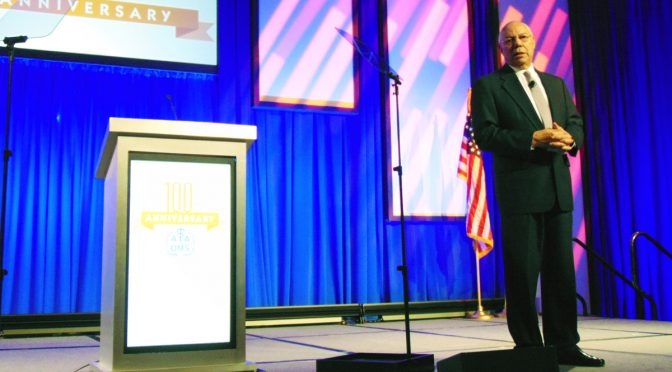
The official title of the event was the “100th Annual Meeting, Scientific Session and Exhibition of the American Association of Oral and Maxillofacial Surgeons (AAOMS).” That is quite a mouthful! This is a significant event in the dental profession, attracting thousands of DMDs. A DMD is a dentist who is also a medical doctor. These professionals do everything from extractions to implant placement to complex oral surgery cases. Colin Powell was the keynote speaker. Several thousand meeting attendees attended his talk. I wrote a brief article about his speech for Dental Tribune — link here. My meeting roundup article and photo gallery is here. The complete edition of the Day 2 live paper is available as a PDF here.
The dental event, which included educational sessions plus a three-day trade show, was held at McCormick Place. We stayed across the street at the brand new Hilton Garden Inn, which is in the same building as a Home2 Suites and a Hampton Inn.
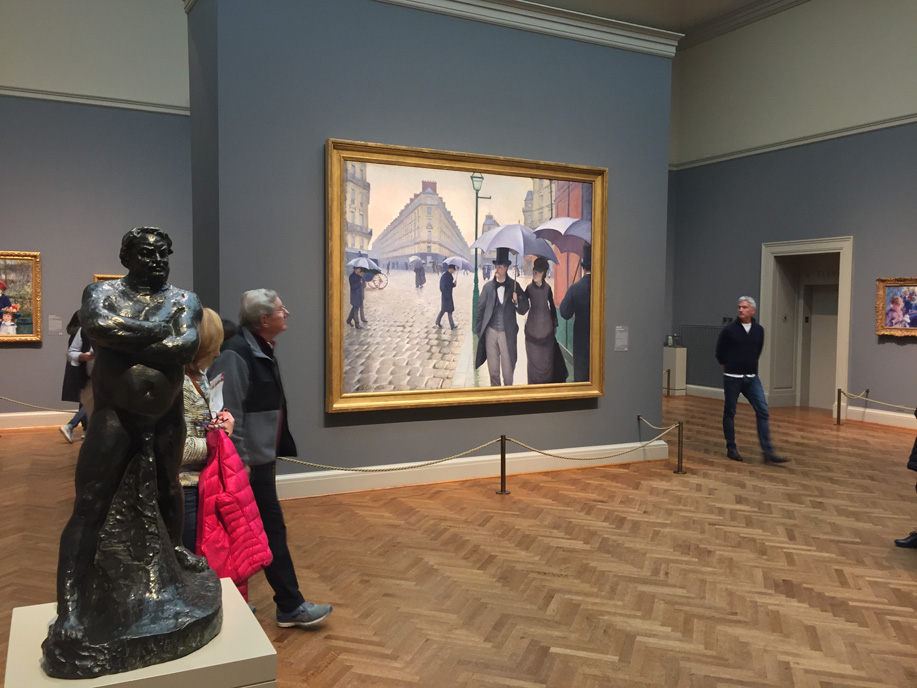
On one of the days I finished early, and I had time to make a brief visit to the Art Institute.
The Art Institute in Chicago. (Photo by Fred Michmershuizen)
Grant Wood’s ‘American Gothic’ — which depicts a father and his unmarried daughter. (Photo by Fred Michmershuizen)
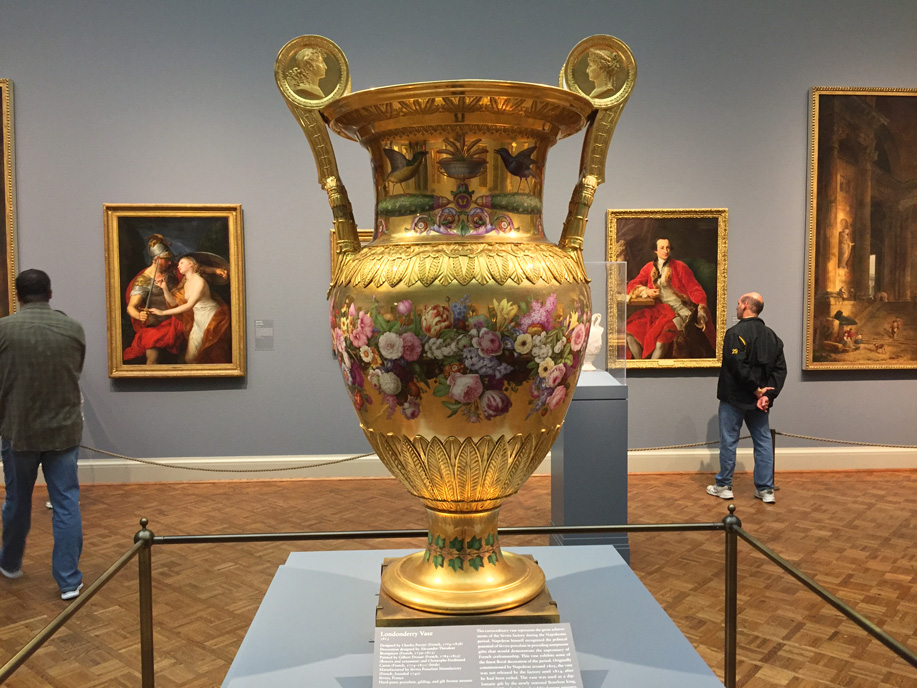
Napoleonic-era ‘Londonderry Vase’ at Art Institute in Chicago. (Photo by Fred Michmershuizen)
Here’s a view from 24th Street and First Avenue in Manhattan, looking west. On the right is New York University College of Dentistry. And in the distance, the tall skyscraper is the Metropolitan Life Insurance Company Tower — which was the tallest building in the world when it was erected in 1909!
What does a 15-year-old girl have to say about the United States Constitution? More than I could possibly have imagined, before attending the brilliant one-act play “What the Constitution Means to Me” tonight at the New York Theatre Workshop. It’s written and performed by Heidi Schreck, a woman in her 40s. The setting is an American Legion meeting, where, as a teenage girl, she debated about the document before a gathering of cigar-smoking old men.
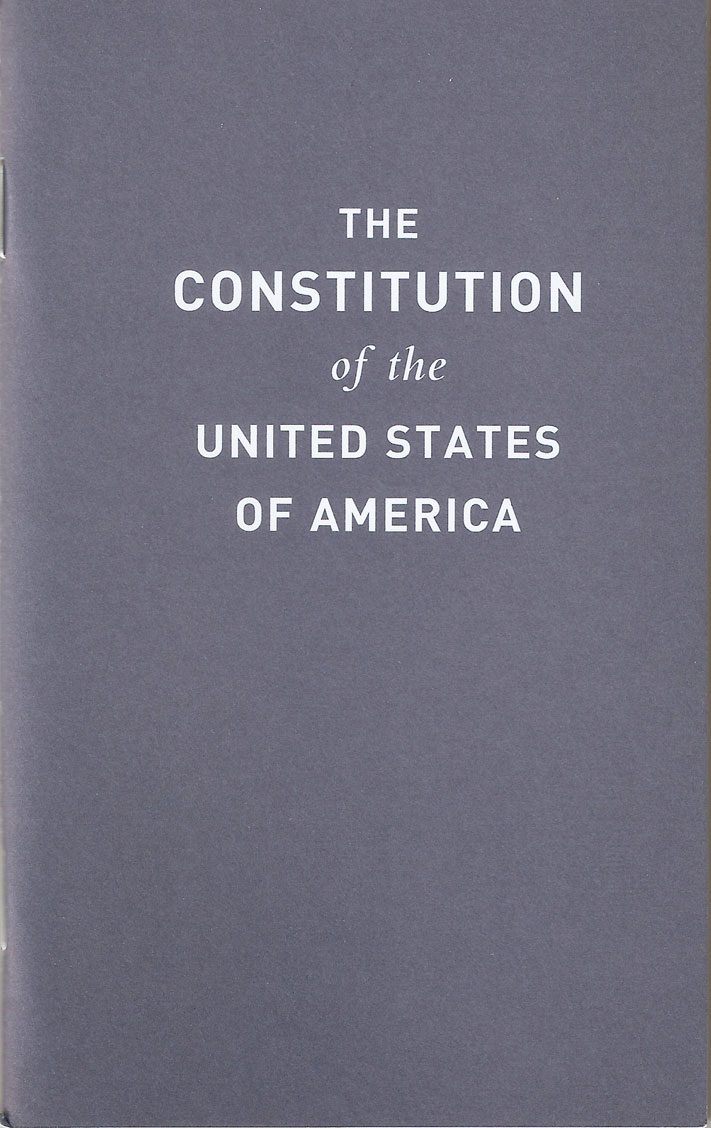
In telling her story, told from an unapologetically feminist perspective, the playwright channels her younger self, while at the same time reflecting upon two and a half decades of subsequent life experience and wisdom. She talks frankly about her own body and tells stories of her mother and grandmother. Toward the end of the presentation, Schreck is joined onstage by a genuine New York City high school student, with whom she engages in a live debate. That’s the portion of the evening featuring audience participation, when everyone receives a copy of the Constitution itself (my copy is pictured).
The play also features Mike Iveson of “Orange Is the New Black,” who offers a personal “reveal” of his own. Audio recordings of actual oral arguments from the Supreme Court bench are played, in which the voices of Antonin Scalia, Ruth Bader Ginsberg and others are heard.
I was genuinely moved by this thought-provoking and educational piece. In my view, if those 11 while male Republicans on the Senate Judiciary Committee were to see this, they might think twice before voting yes on Kavanaugh’s nomination to the Supreme Court. If you happen to live in New York City or if you are going to be visiting this fall, this is not to be missed. It’s playing until Oct. 21.
When the lads were on tour in 2015, they decided to perform an entire album in concert, and “Sticky Fingers Live At the Fonda Theater” documents this complete show — on both DVD and also a companion music CD.
Released in 1971, “Sticky Fingers” is one of the best albums the Stones ever put out. It has “Brown Sugar,” “Wild Horses” and Bitch” on it. It’s also the one featuring a close-up picture of a man’s crotch, complete with a working zipper! Back when people bought records, this was a really cool gimmick. Andy Warhol designed the cover, and I had always assumed it was Mick Jagger’s junk bulging out. But as we learn in some behind-the-scenes interviews on the DVD, it was actually a picture of a male model. In the interviews, two different guys claim to be the crotch-man. The world will never know.
Anyway, fast-forward to 2015, and the Stones are still touring — and they decide to perform this whole album in one show. For me, it’s a real pleasure to see the Stones play these songs in a smaller venue. They don’t go in order of the track listing on the album itself, but they do perform ALL the songs. There are many different kinds of songs, from hard rockers to slow blues and even some country songs. Many of the tracks on “Sticky Fingers” are not ones they usually play live. Some of my favorites on this particular concert DVD/CD set are “Sister Morphine,” “I Got the Blues” and “Can’t You Hear Me Knocking.”
Before they play the Sticky Fingers songs, they open with “Start Me Up,” and at the end they throw in an encore that includes a rollicking version of the BB King song “Rock Me Baby” in which Mick plays harmonica.
This is one of the many offerings in the “From The Vault” series from the Stones.
Reading about Napoleon makes me appreciate George Washington even more. And James Madison! It was not long after the United States Constitution had been ratified and Washington inaugurated as our first President that the French people took matters into their own hands. The French Revolution was long, complicated and violent, and it’s hard to comprehend even today. The Jacobins and Girondins fought one another. The French overthrew their Bourbon King, Louis XVI, who incidentally had not long before supported the American Revolution by sending us money, ships and troops! King Louis XVI and Queen Marie Antoinette eventually lost their heads to the guillotine, and later a “Committee on Public Safety” controlled by Maximilien Robespierre took over. There was a “Reign of Terror” in which political enemies were beheaded left and right. Eventually Robespierre himself was beheaded, and a five-person “Directory” took over.
It was in the middle of all this chaos that Napoleon came to power. He eventually declared himself Emperor and conquered most of continental Europe. He even held a coronation in Notre Dame Cathedral, in which he crowned himself and his wife, Josephine, in the presence of the Pope. Along the way he wrote laws called the Civil Code or Napoleonic Code, established a school system, supported the arts and directed large public works projects. He also was a brilliant military commander, whose troop movements and strategies changed forever the manner in which battles were waged and won. Napoleon’s battles would be studied at West Point for generations, including by Robert E. Lee, Ulysses S. Grant and many others.
Napoleon, who had been trained in artillery, started out early in his military career by invading what is today northern Italy. He then led an army through Egypt and Syria, returning to Paris to help stage a coup in which a three-person “Consulate” took over. But Napoleon controlled everything, and by 1804 he got powerful enough to crown himself Emperor. Europe’s other “crowned heads” frowned on this because they feared they could be overthrown themselves. They formed alliances against him and the wars continued. Napoleon racked up wins all over the place, bringing his reforms and his civil code with him wherever he went.
But he also made mistakes. His invasion of Spain did not go well, meeting with much resistance. His biggest blunder was to invade Russia. He brought 400,000 troops all the way to Moscow, only to have it burned down by the locals before he could do anything there. He was forced to turn back just as a brutally cold winter was beginning. Most of his soldiers died of starvation, disease or frostbite. By the end of the Russian campaign, his army was down to just 40,000. It would be the beginning of the end for Napoleon. (More on his demise in a moment.)
The Bonaparte family tree is broad and complex. Napoleon had seven brothers and sisters. He was second oldest. As he conquered more and more of Europe, he named his siblings and their husbands and wives to rule as sovereigns of the various kingdoms. He named Joseph, his older brother, King of Naples and King of Spain. He made younger brother Louis the King of Holland. Lucien became Prince of Canino, Jerome King of Westphalia. He made his sister Caroline and husband the Queen and King of Naples, and so on.
In 1796 Napoleon married Josephine, a widow who had two children, Eugene and Hortense. Immediately after their marriage, Napoleon went away to war and Josephine cheated on him. He had been sending her a bunch of sappy love letters, but when he found out about his wife’s infidelity he began cheating on her. Napoleon took many mistresses over the years, often paying them large sums of money. He fathered illegitimate children with at least two of the women.
As the years went by and Josephine did not bear Napoleon any children, he decided he needed to divorce her. He asked Tsar Alexander to let him have his younger sister but the Russian ruler said no, so he married Marie Louise, who was the daughter of the Emperor of Austria. Marie Louise bore Napoleon a single child, a son, Napoleon II, also known as the “King of Rome,” who died at age 21. Marie Louise would later cheat on Napoleon with an Austrian general.
Napoleon liked to arrange marriages of his relatives and close associates. He got his brother Louis to marry Josephine’s daughter, Hortense, and they had three children, including Napoleon III, (Napoleon’s nephew, also his step-grandson!) who would later become Emperor of France.
Here are a few additional facts about Napoleon:
He was not French! He was born on the island of Corsica, in the Mediterranean.
He was born Napoleon Bonaparte, but went by just Napoleon when he became Emperor. Sovereigns go by just their first names. He considered himself to be peers with the other monarchs, but they did not see him that way. Unbeknownst to Napoleon, Tsar Alexander in particular saw him as a nuisance and was waiting for the right moment to get rid of him.
In paintings and drawings, Napoleon appears lean and good-looking when he is young, and short and fat when he is old.
He was sexist.
He admired Alexander the Great and Julius Caesar. He aspired to be like them.
When he met someone, he had a way of asking the person a number of quick questions in a rapid-fire, matter-of-fact manner.
Wherever he went, he plundered artworks and artifacts and sent the loot back to be exhibited in the Louvre.
In Egypt he traveled with a group of “savants” who put together an extensive report on the geography, culture and artifacts of the ancient civilization. They also discovered the Rosetta Stone, which would later fall into British hands.
Napoleon did not hold deep religious beliefs, but he would often adopt the religious customs of the local population of whatever country he happened to be invading. In Egypt he told those he met he was interested in converting to the Muslim faith. In northern Italy, Catholicism.
One of his closest deputies, Jean-Jacques Cambaceres, was gay.
Although Napoleon was not an evil dictator bent on genocide (he was not a Hitler), he was responsible for a number of atrocities including a massacre in the Middle East.
Because Napoleon needed money for his wars, in 1803 we got the Louisiana Purchase! James Monroe and Robert Livingston negotiated directly with Napoleon during the presidency of Thomas Jefferson. It doubled the size of the United States.
After his disastrous invasion of Russia Napoleon was more vulnerable than ever, and a “Sixth Coalition” including Russia, Prussia, Austria and Great Britain united to fight him in what is today Germany. Napoleon won in Dresden but was defeated in Leipzig. The “Allies” offered Napoleon peace terms that would have allowed him to stay in power but give up most of the territory France had conquered. When Napoleon refused the deal, the Allies tightened the screws by invading France and occupying Paris. They forced Napoleon to abdicate and leave France, but they let him become king of the somewhat small, somewhat remote island of Elba — located in the Mediterranean off the coast of Italy. This was Napoleon’s first exile. Before being sent away, Napoleon attempted suicide by taking poison but survived.
Napoleon was on Elba for less than a year, during which time he instituted a number of reforms and public improvements there. Meanwhile, back in Paris, Louis XVIII became king. Remember the Bourbon king Louis XVI and his wife, Marie Antoinette, who had been beheaded during the French Revolution? Their surviving relatives — the Bourbon family — had been hiding in exile all this time! Louis XVI’s son (that’s the Dauphin in Mark Twain’s Adventures of Huckleberry Finn), who would have been King Louis XVII, had died during Napoleon’s reign, and therefore Louis XVIII, who was Louis XVI’s brother, took charge. But he wasn’t much of a leader and made a number of blunders that resulted in taxes and food prices going up. Stupidly, he also put the military on half-pay.
Sensing an opportunity, Napoleon escaped from Elba by boat, landing on the southern coast of France near Cannes (where the film festival is held today). Napoleon had a small band of troops with him, but as he traveled north through France he picked up more and more troops and momentum. By the time he got back to Paris, Louis XVIII and the rest of the Bourbons had run away again, allowing Napoleon to re-form a government, and raise yet another army to go against the Allies — now known as the Seventh Coalition, made up of Austria, Russia, Prussia and Britain. The fighting that resulted culminated in the battle of Waterloo, in what is today Belgium. This period came to be known as the “Hundred Days.” After his defeat at Waterloo, Napoleon returned briefly to Paris before fleeing to the western coast of France, where he sought asylum aboard a British warship.
Napoleon wanted to go to the United States or even to London, but the British decided to send him to the island of St. Helena in the middle of the Atlantic — much smaller and much more remote than Elba. This was Napoleon’s second exile. He was allowed to take a small number of followers with him to St. Helena, including a pastry chef and a lamp-lighter. But Longwood House, where he was to reside, was damp and dreary and was infested with rats and mosquitoes. The British named a custodian to watch over him, someone who was unnecessarily mean. Napoleon died six years later of stomach cancer. In 1840 his body was brought back to Paris and entombed in an elaborate monument.
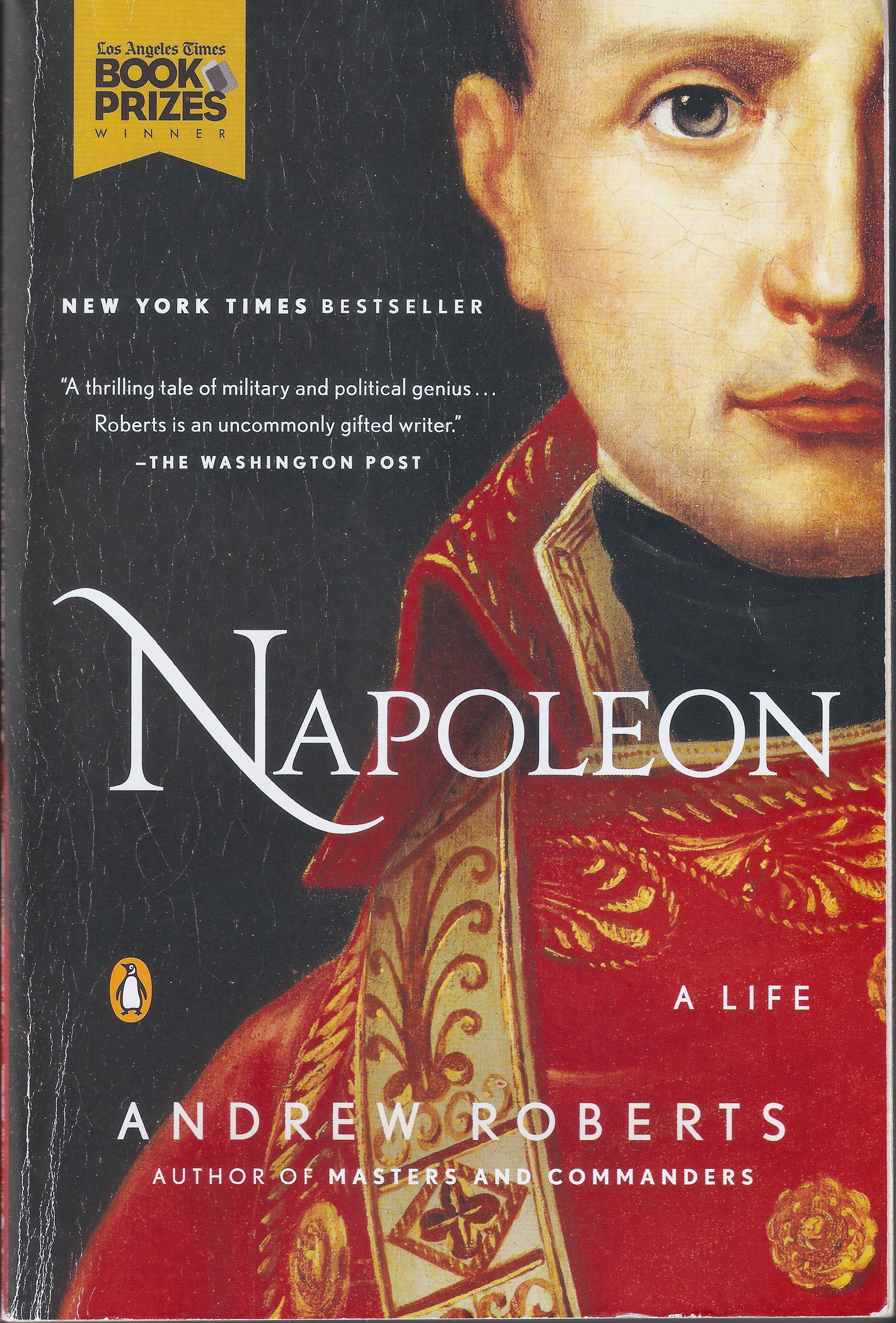
I learned so much reading “Napoleon: A Life,” the 810-page biography by Andrew Roberts. Published in 2014, this book is complete with helpful maps and beautiful color images. I read the paperback edition. I very much enjoyed this book. The author, a British historian, drew on a recently compiled collection of 33,000 letters and referred to tremendous amounts of other source material. The tome is divided into three parts: Rise, Mastery and Denouement.
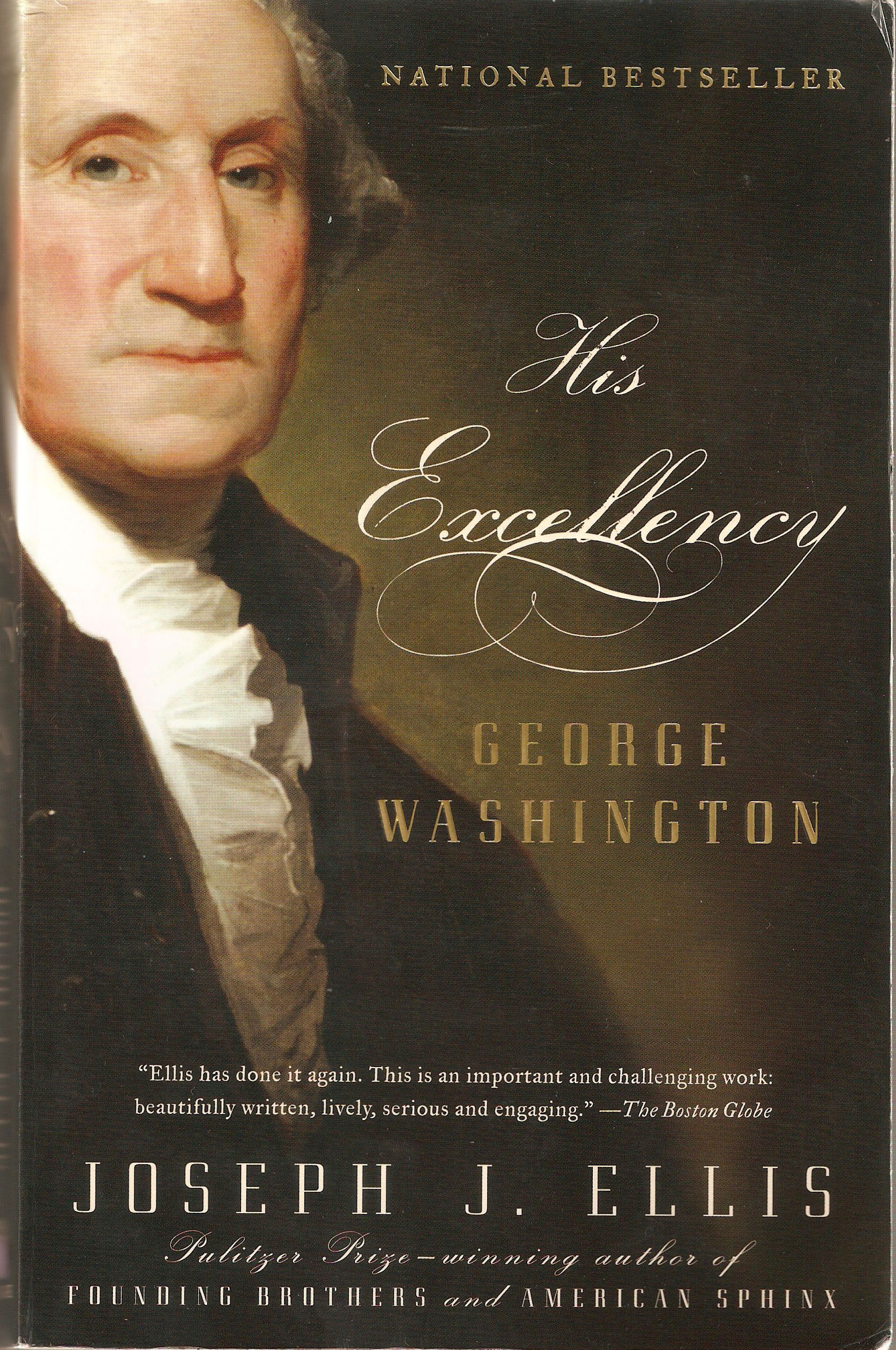
Back to George Washington. The biography “His Excellency” by Joseph Ellis had me crying on just about every page, but I did not shed a single tear for Napoleon. Washington had been as popular in America as Napoleon was in France, and had he wanted to Washington could have ruled in a similar manner here. But Washington was a bigger man by giving up power and going back to his farm. Another gift Washington gave us was the policy of neutrality when it came to international affairs. Around the time of the French Revolution, many here in America wanted us to go to war with France against Britain. What a horrible error that would have been. I also came to appreciate the wisdom of James Madison and the other Founding Fathers, who wrote a constitution for our own country complete with separation of powers, checks and balances and provisions for peaceful transition of government from one administration to another.
For the past two years almost, I have been reading biographies of the U.S. presidents, but I wanted to take a detour and read about Napoleon. I’m glad I did. I noticed this book while looking through the biography section at Barnes and Noble, and it caught my eye. Learning Napoleon’s story has enhanced my appreciation of our nation’s founders.
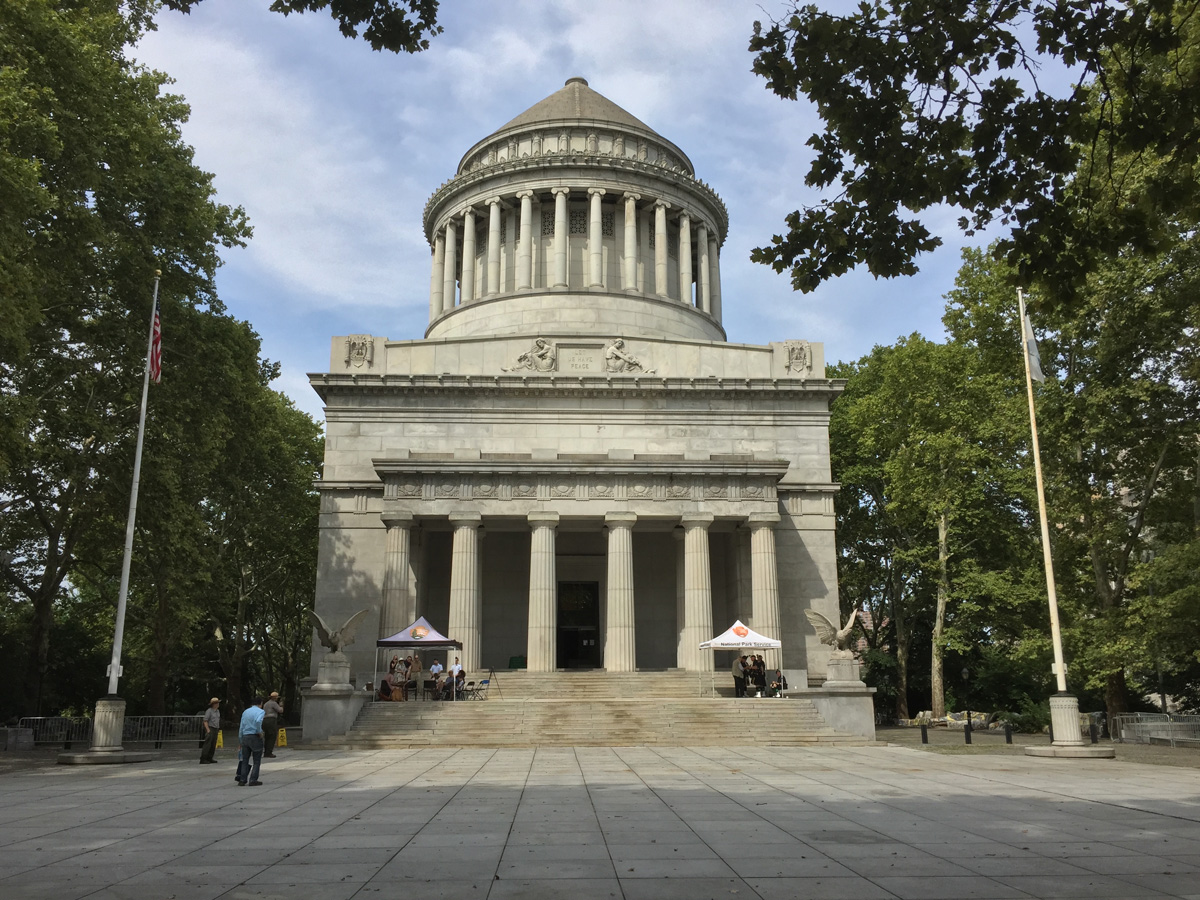
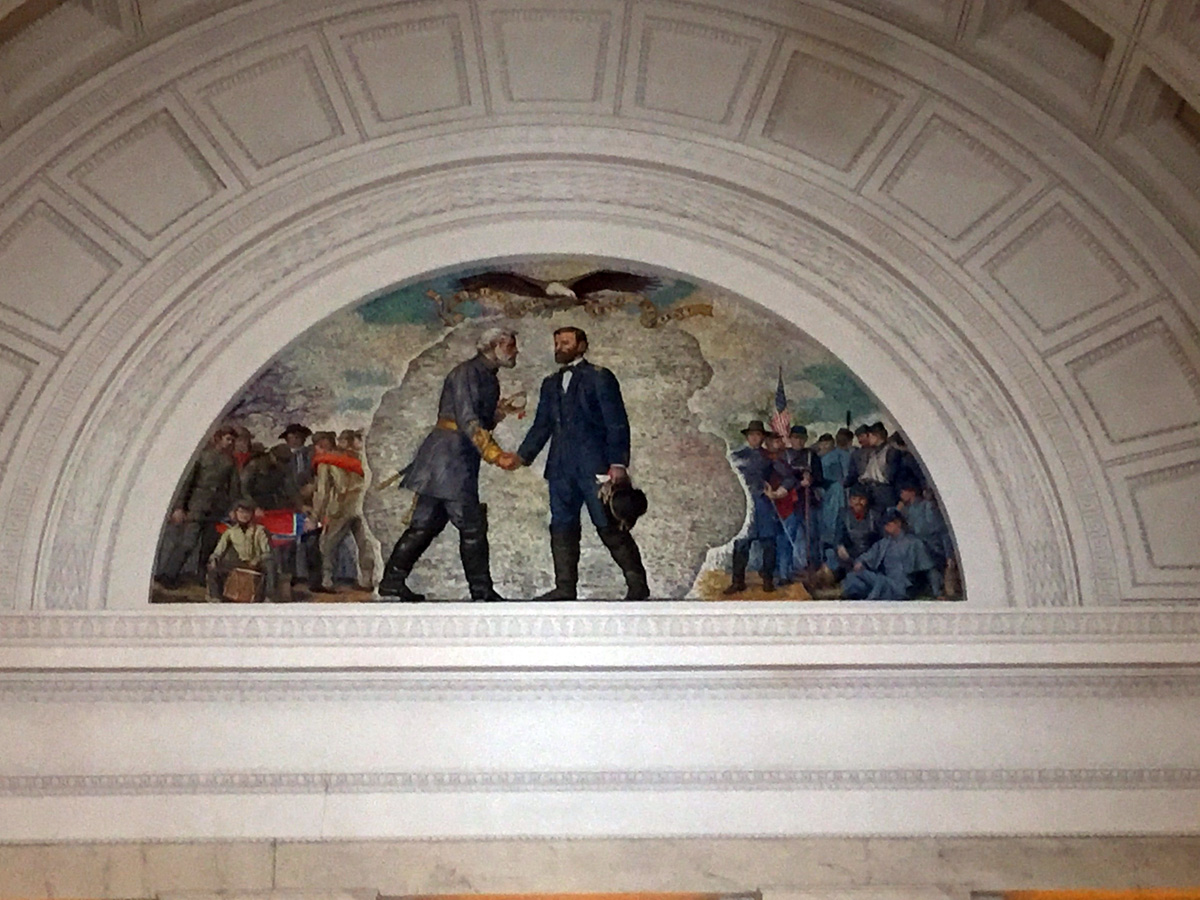
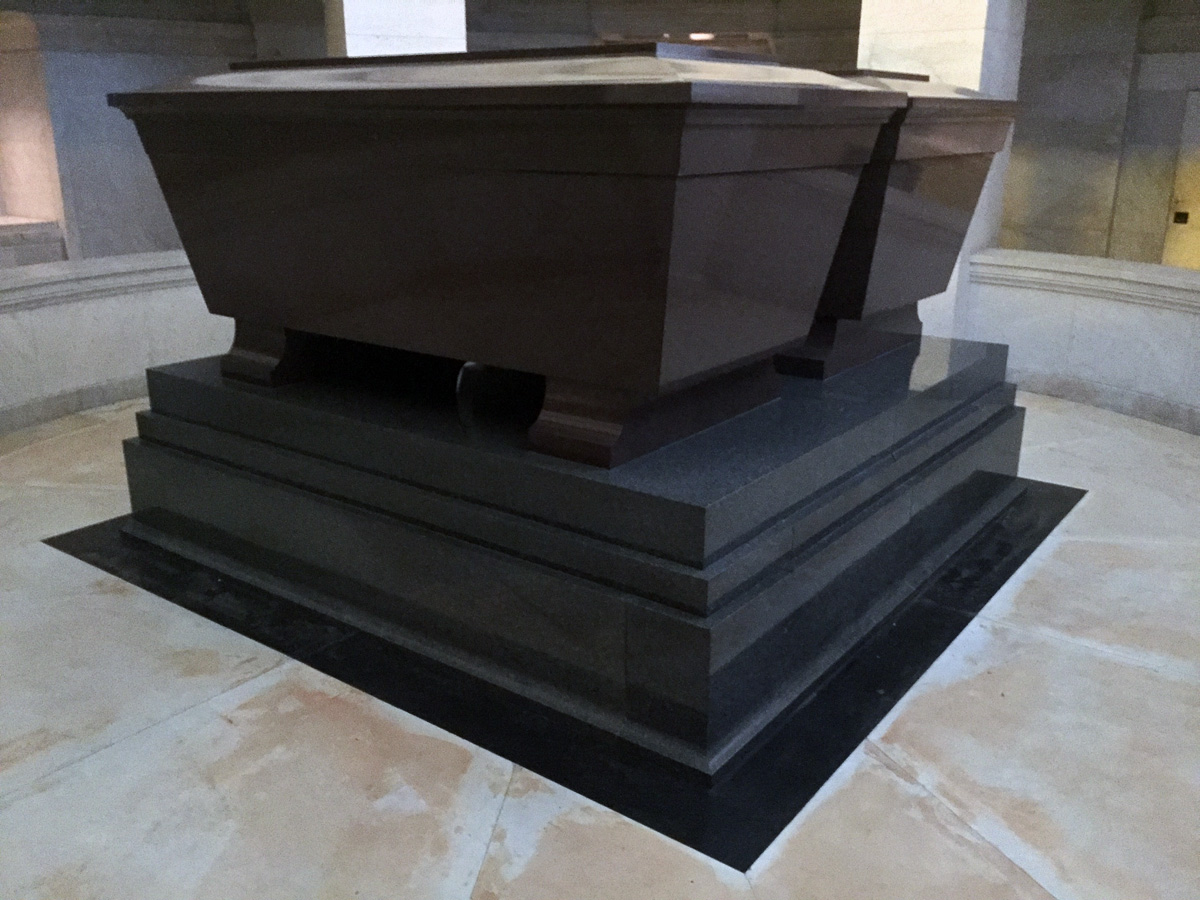
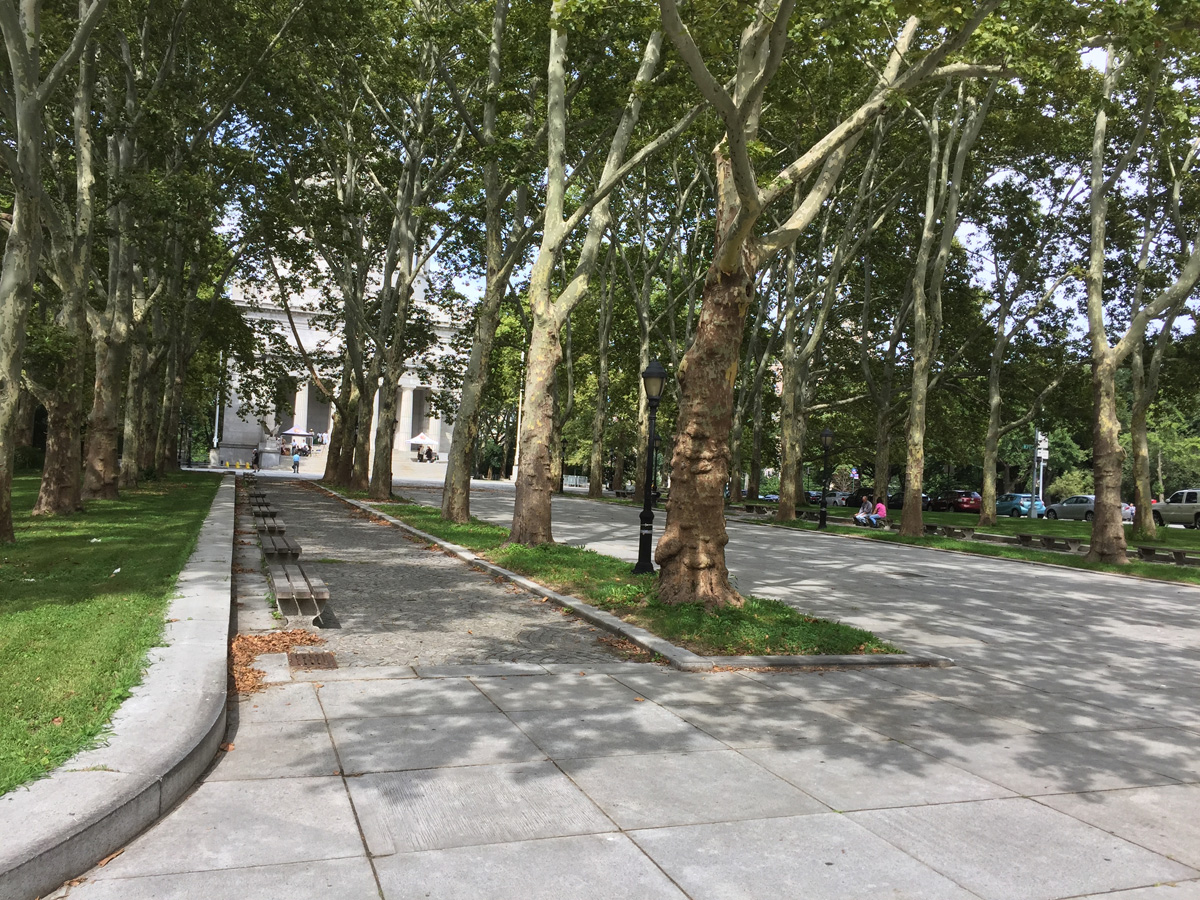
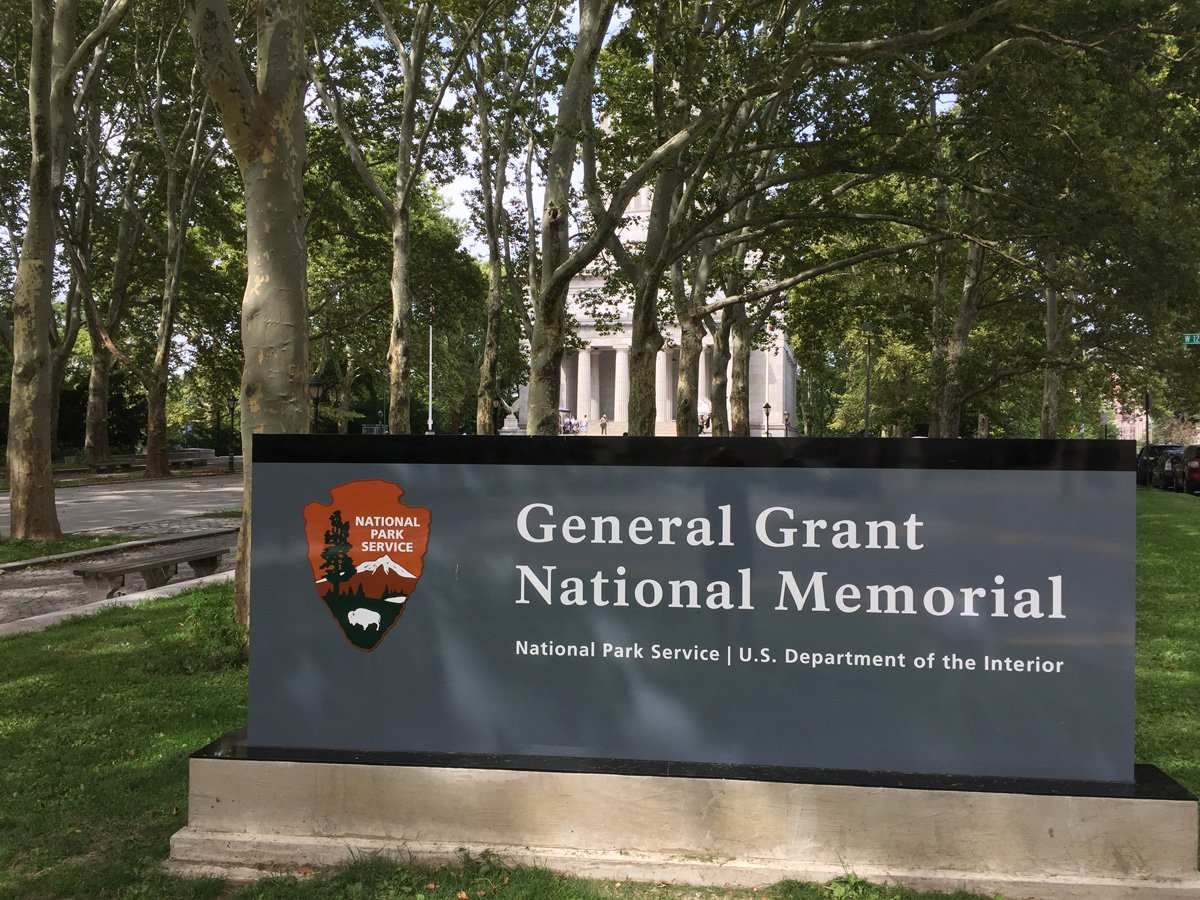
Today I visited the General Grant National Memorial, also known as “Grant’s Tomb.” It’s a grand mausoleum, where Grant and his wife are laid to rest. It’s located on the Upper West Side between Riverside Church and Riverside Park, at 122nd street. It’s operated by the National Park Service. Although it’s right on the bicycle route I took dozens of times over the years, today was only the second time I visited.
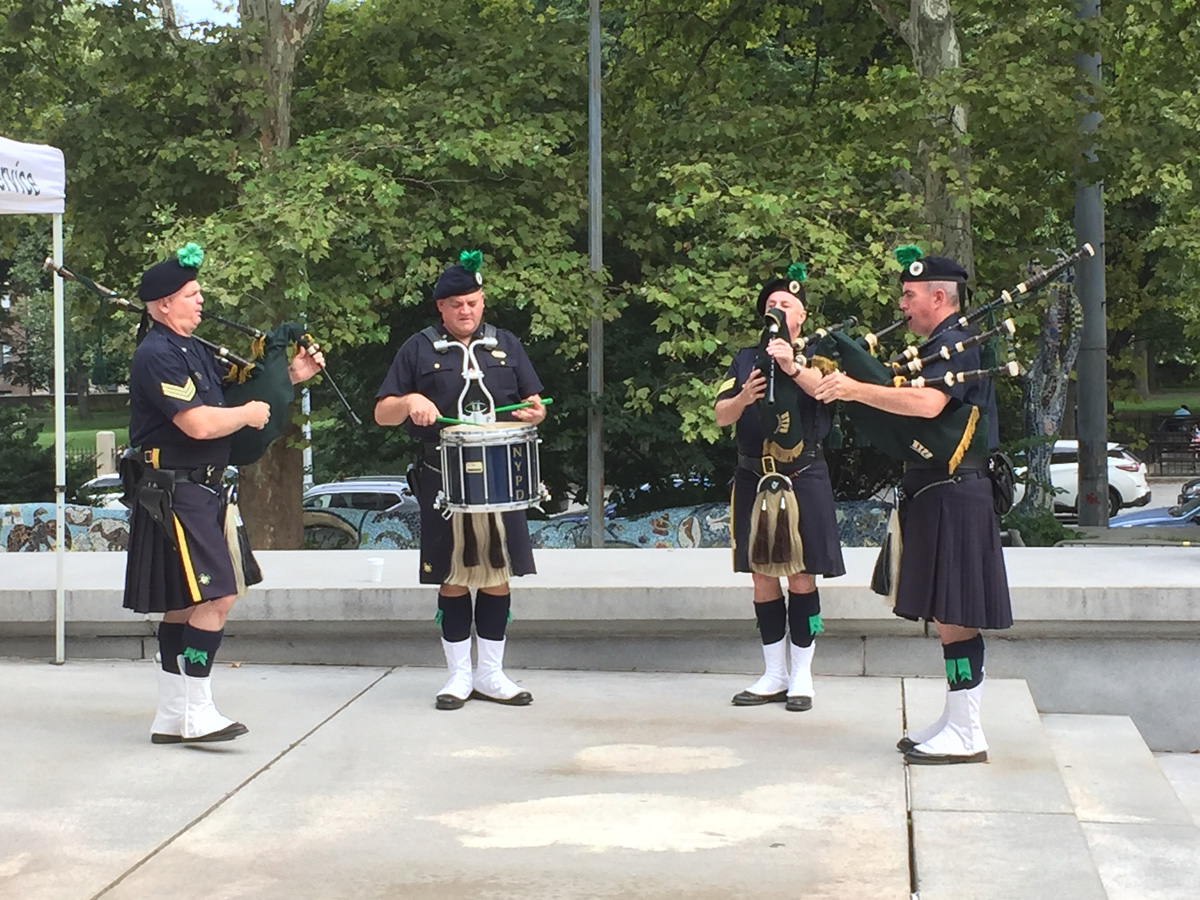
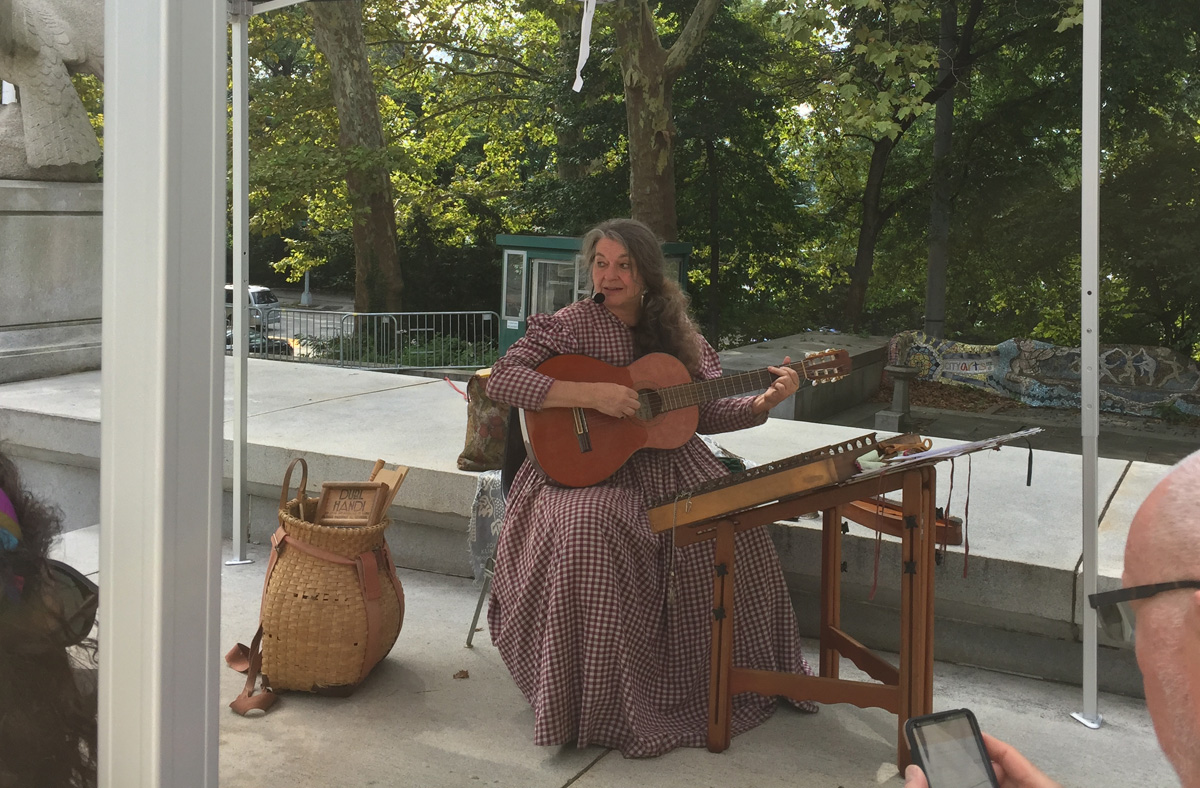
Coincidentally, my visit today corresponded with the 102nd birthday of the National Park Service, and in honor of the occasion there were bagpipers and an outdoor performance of Civil War tunes by Linda Russell. There’s a visitors center across the street and down the stairs, with exhibits, an excellent 20-minute film, a gift shop and restrooms. The park rangers are friendly and knowledgeable.
I was especially moved by my visit today, having recently completed a biography of Grant.
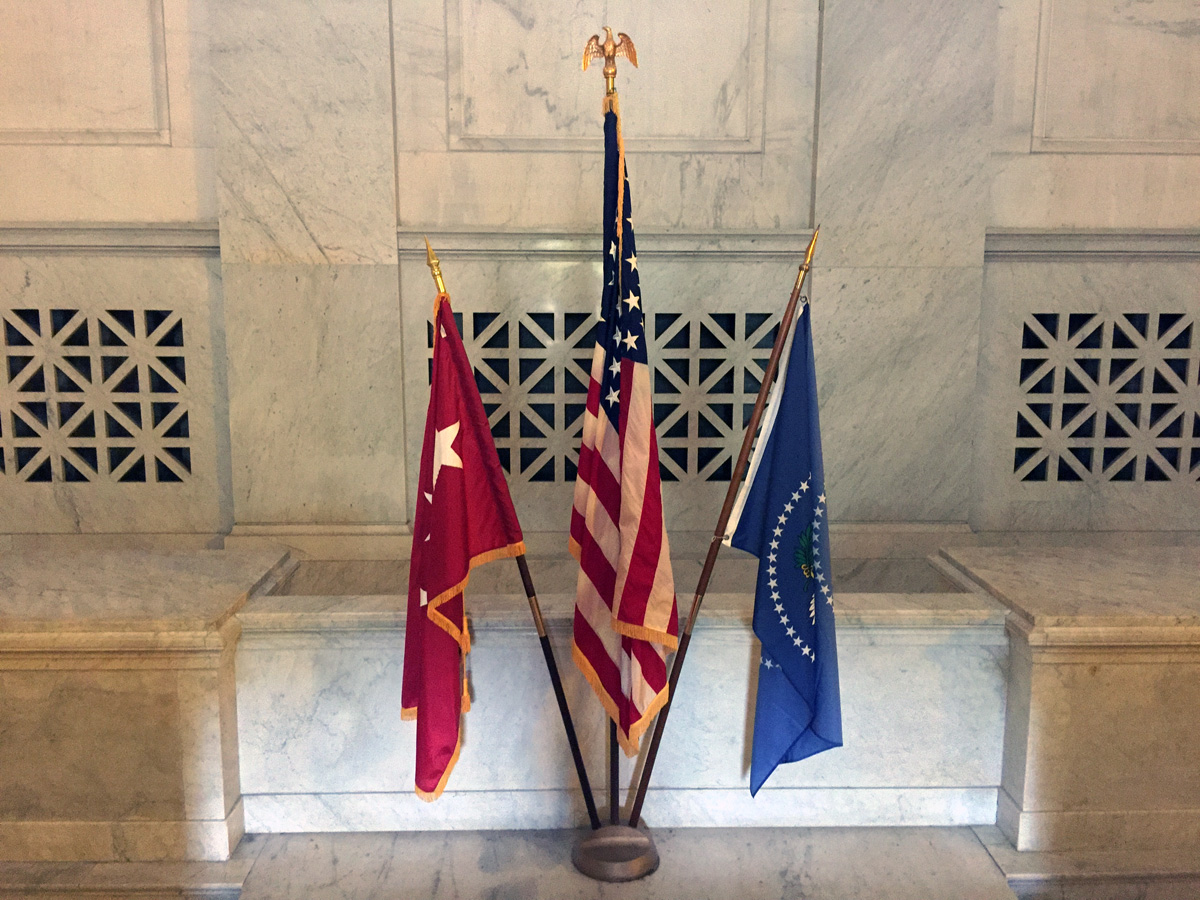
Here are some pictures from my visit — click to make them bigger:
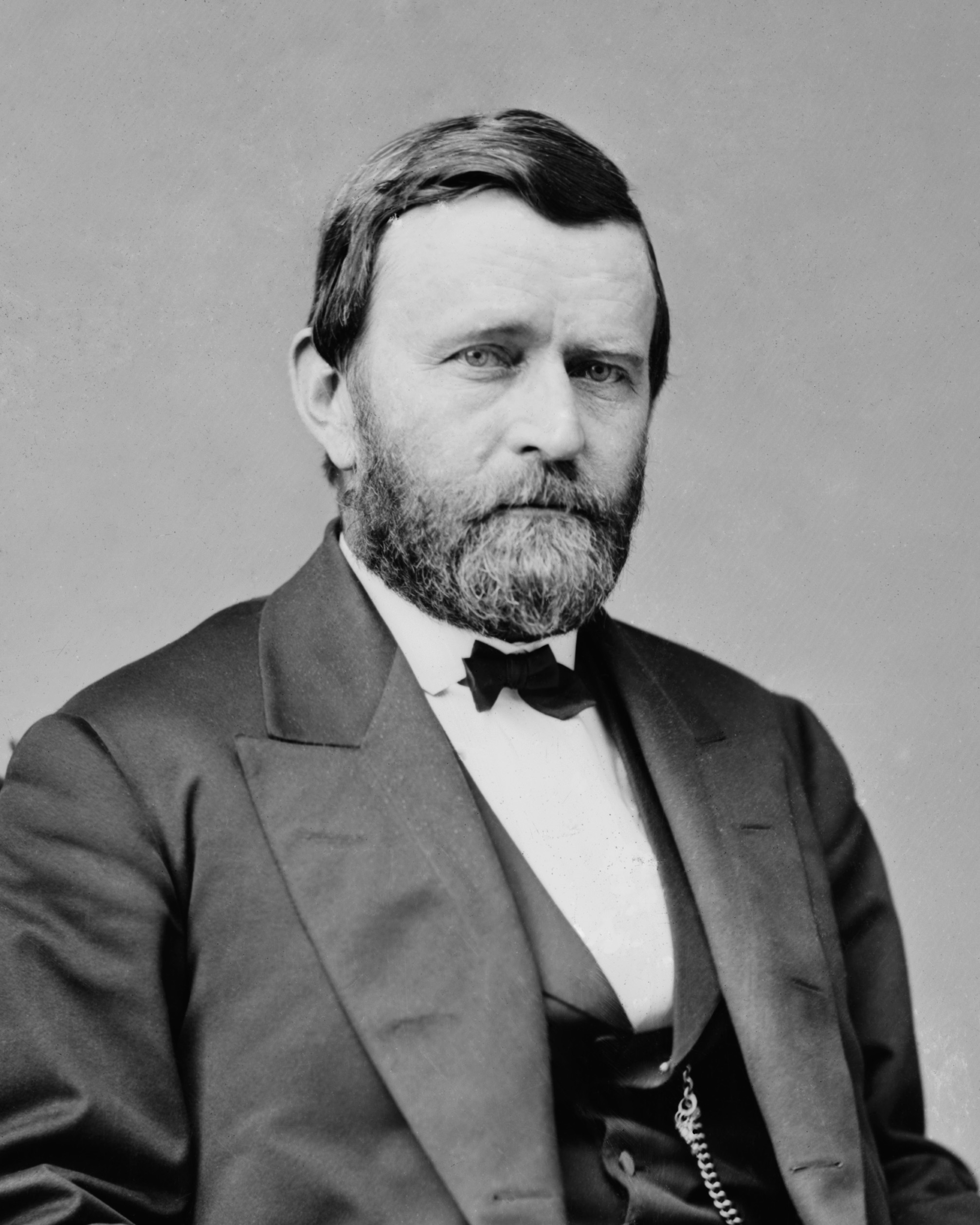
It was what General Ulysses S. Grant did after the battle of The Wilderness that changed things. By May 1864, the Civil War had been going on for more than three years. The loss of life to this point had been more than anyone could have imagined. It was already apparent that the South was not going to be able to win the war, but the Confederates were trying to drag the war on longer, hoping to make the conflict so costly to the North that the voting public would tire of the war and throw Lincoln out of office, to be replaced by someone who would end the war. The stakes were enormous. More than just the preservation of the Union was at stake. Ending the war at this point would have re-enslaved the 3.5 million people who had been freed on January 1, 1863, by Lincoln’s Emancipation Proclamation.
President Grant, 1870 By Mathew Brady – Library of Congress, Public Domain
By this point Lincoln had already replaced his top generals numerous times. McClellan, Burnside, Hooker and Meade had all failed to prosecute the war with the urgency and vigor that Lincoln wanted. After Grant achieved key victories for the Union at Vicksburg and Chattanooga, Lincoln summoned him to the nation’s capital and named him Lieutenant General. Grant was the first since George Washington to hold the rank.
The Wilderness was Grant’s very first battle after being put in charge of all Union armies and his first faceoff with Confederate General Robert E. Lee. It did not turn out well for the Union. But unlike his predecessors who had all retreated north after suffering large casualties in battle, Grant decided to move his army farther south. There was to be no turning back this time. Grant was not one to make excuses, to blame others or to give up. Final victory was still a long way off, but Grant knew it was coming. It came the following spring, when Grant accepted Lee’s surrender at the home of Wilmer McClean, in the town of Appomattox Court House, Virginia.
After the war Grant stayed on as commander of the U.S. Army, serving under President Andrew Johnson. Grant served briefly as Secretary of War during Johnson’s dispute with Congress over the Tenure of Office Act. He was elected President in 1868 and then re-elected in 1872 by wide margins both times in both the popular and electoral votes. He never campaigned. In his first inaugural address, he called for the ratification of the 15th Amendment granting blacks the right to vote, and he spoke out for the rights of Native Americans. He stumbled early on with less-than-ideal cabinet appointments. Grant himself was not corrupt, but some of his cabinet secretaries became involved in various scandals, which got worse in his second term. One of Grant’s best picks was Hamilton Fish as Secretary of State, whom grant had plucked out of retirement. Fish had been governor of New York and a United States Senator and turned out to be an excellent Secretary of State. He served through both of Grant’s presidential terms.
During the late 1860s the Ku Klux Klan emerged. Grant recognized the KKK immediately for what it was — a domestic hate group intent on using terrorism to prevent blacks from exercising their rights as citizens to vote. Grant formed the Justice Department and directed it to fight the Klan. He went so far as to declare martial law and to use federal troops in parts of the South to enforce voting rights.
Here are some additional facts about Grant:
He married Julia Dent, and they had four children. Julia’s family owned slaves, but Grant’s family was anti-slavery and his parents boycotted the wedding.
He was born in Ohio. After marrying Julia he built a house near her family in Missouri, calling it “Hardscrabble.” They later moved to Galena, Illinois.
His given name was Hiram Ulysses Grant, but from birth he was called Ulysses. His mother got the name Ulysses from a French novel about the Greek general Ulysses. When Grant got to West Point with the initials H.U.G. on a trunk, he realized that was not going to work. There was too much teasing from the other cadets. The senator who had appointed Grant to West Point had used Ulysses Simpson Grant (Simpson was his mother’s maiden name) so he went with the initials U.S., which were interpreted as “United States” Grant, and, later, “Unconditional Surrender” Grant.
Like Robert E. Lee, Jefferson Davis, Zachary Taylor, Franklin Pierce and many others, Grant served in the Mexican American War. He was a quartermaster.
Several of the groomsmen in Grant’s wedding later fought against him as officers in the Confederate army.
Later in life, Grant became friends with Mark Twain.
As my cousin Lisa would be pleased to know, Grant loved horses! One of his favorites was named Cincinnati.
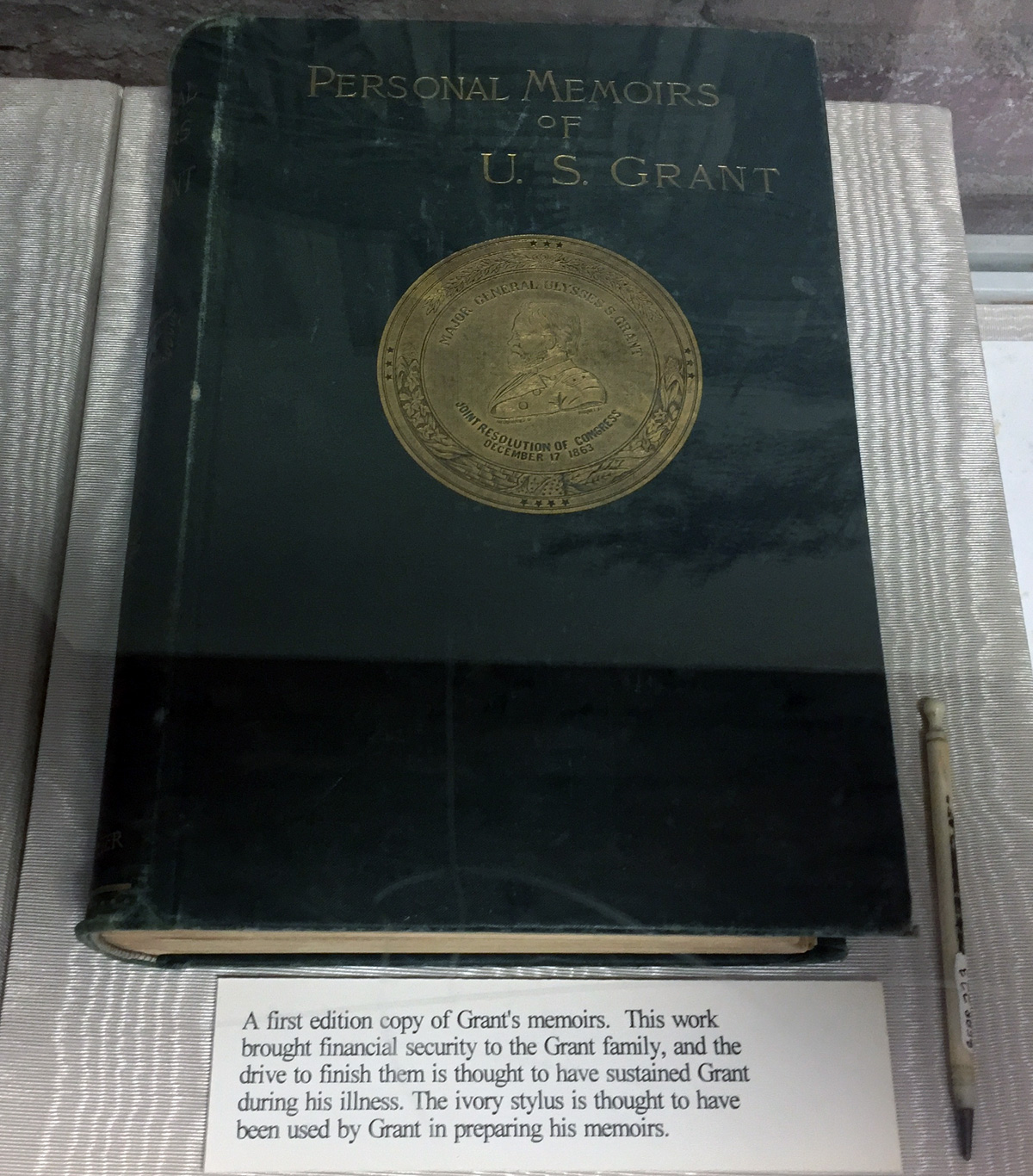
After Grant left office, he and Julia went on a grand overseas tour, traveling extensively throughout Europe, the Middle East and the Orient. Upon returning to the United States, he would have run for President again in 1880, but the Republicans nominated James A. Garfield instead. Grant eventually retired to New York City. He and one of his sons later invested with a Bernie Maddow-type swindler, and Grant lost all his money. He spent the final part of his life writing his memoirs, which, thanks to the help of Mark Twain, netted enough money for Julia to live on after his death. He died of throat cancer just days after finishing the manuscript. Today he and Julia rest in a massive mausoleum in New York City.
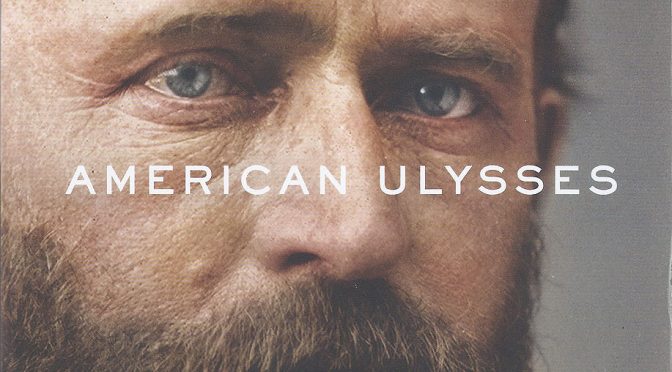
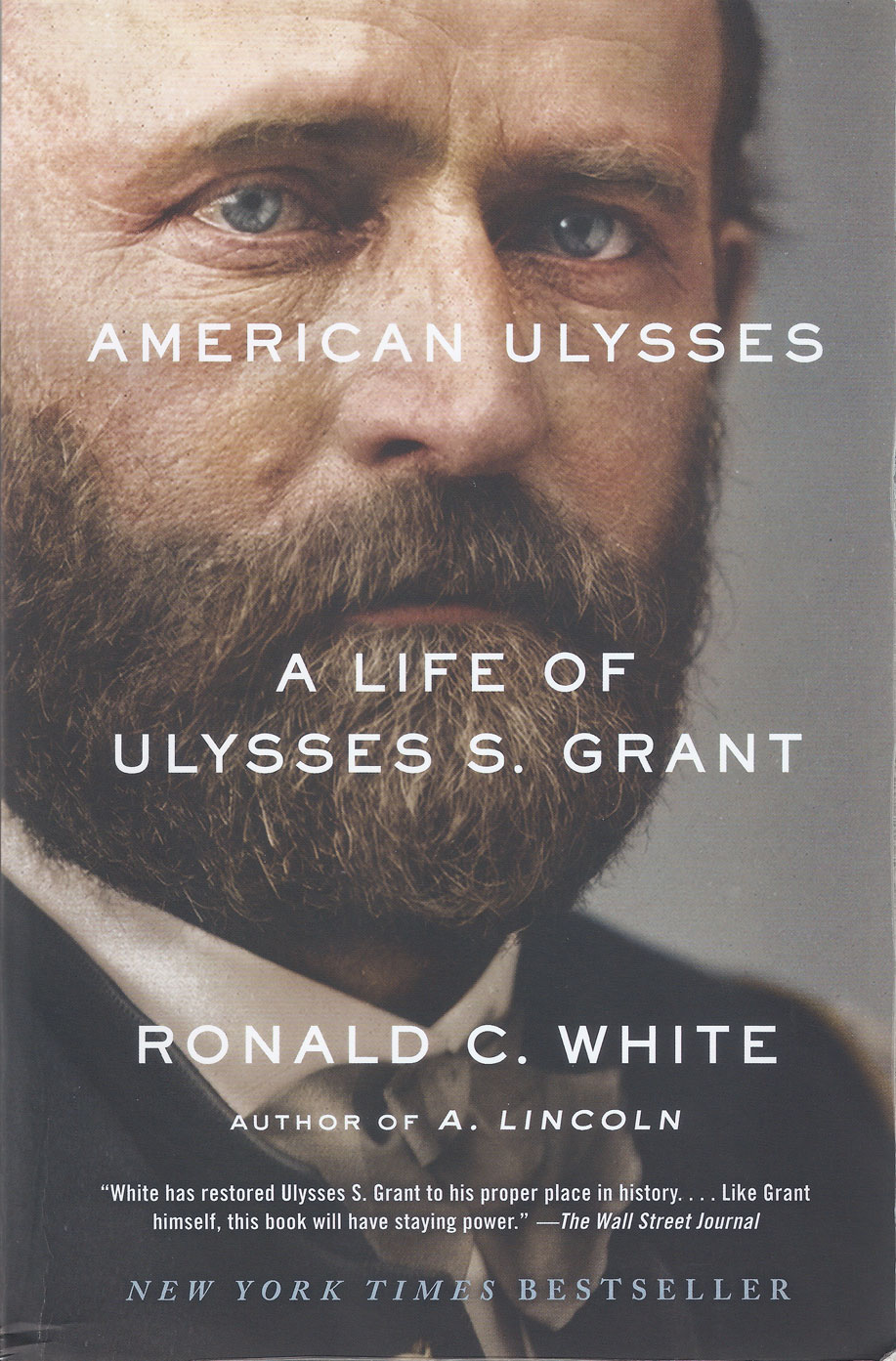
“American Ulysses: A Life of Ulysses S. Grant,” by Ronald C. White (pictured, the book I read) is one of two major biographies of Grant published recently. The other is by Ron Chernow. Both are what are often called rehabilitative, meaning the authors go back and re-examine a person’s reputation that has fallen over the years. Some historians have looked down upon Grant for a number of offenses, both real and imagined. Among them are that he was not as smart as Lee (Grant graduated 21st out of 39 in his class at West Point, while Lee graduated 2nd). Others have postulated that Grant was too indifferent to the large number of troops who were killed, and that he was a drunk. White argues forcibly against these accusations.
Having thoroughly enjoyed White’s previous biography of Lincoln, I decided to read his telling of Grant’s life story as well, and I was richly rewarded. “American Ulysses” was a page-turner, with many helpful maps, photographs and illustrations. He also presents Grant as a complete human being, describing his family life and even the books he read and the things he said to his friends and colleagues. And yes, I cried in the end!
In reading this book I got to know the general quite well. I can therefore say confidently that had a President Grant been in office when a group of white supremacists held a “Unite the Right” rally in Charlottesville, Virginia, last year, the response from the White House would have been quite different.
There were 11 articles of impeachment against Andrew Johnson, our nation’s 17th President, who went on trial in the Senate back in 1868. Articles 1 through 9 dealt with the Tenure of Office Act. Article 10 dealt with speeches Johnson had given in which he was accused of bringing disgrace upon Congress, and Article 11 was a “catch-all” that incorporated allegations from all the other articles.
Andrew Johnson was a Democrat who became president in April 1865, after President Abraham Lincoln, a Republican, was assassinated just one month into his second term and just five days after Lee’s surrender to Grant that effectively ended the Civil War. Andrew Johnson was not vice president during Lincoln’s first term. Hannibal Hamlin was. But leading up to the 1864 presidential election, the Republicans decided to dump Hamlin from the ticket in favor of Andrew Johnson, who was a Senator from Tennessee. Andrew Johnson had stood out from all the other Southern Democrats because he had stayed loyal to the Union during the war. The goal therefore was to have a “national unity” ticket. But Andrew Johnson did not bring unity to the country. Just the opposite. At the inauguration in March 1865, Lincoln delivered a beautiful address calling for our nation to heal. But Andrew Johnson appeared to be drunk. He was disrespectful, and he insulted cabinet members and embarrassed himself.
Andrew Johnson was also a racist to his core. He infuriated the Republican-dominated Congress by acting on his own rather than through the legislative process on Reconstruction. He wanted to welcome the rebel states back quickly, and he wanted to empower the former Confederates to continue their cruel oppression of those whom they had enslaved. He vetoed legislation passed by Congress, but most of his vetoes were overridden. Congress also passed, by overriding yet another veto, the Tenure of Office Act, which was the legal noose with which they intended to hang Andrew Johnson. The law stated that the president needed Senate approval to fire a cabinet secretary. Congress accused Andrew Johnson of violating the law when he tried to remove Edwin Stanton as secretary of war. Gotcha! It was a dumb law that was later repealed, but it formed the basis for what would become the impeachment of Andrew Johnson.
From the start, the trial itself turned into a bit of a circus. The Republicans were disorganized, and their legal case was ill conceived. The Democrats, meanwhile, used all manner of crazy tricks to delay and obstruct the proceedings. It got really ugly. They argued that Salmon P. Chase, Chief Justice of the United States, who presided over the trial, should not be allowed to make judicial rulings. And when witnesses were finally called, the Democrats objected to everything and the result was that after each question, the entire Senate had to vote up or down on whether or not a witness could answer. This made everything take forever. Opening and closing arguments also took forever. In the early days of the trial the galleries were packed with visitors. But the speeches were so long-winded that people quickly got bored.
The Senate voted on Article 11 first. After Johnson was acquitted by a single vote, the House managers, the prosecutors of the trial, called for adjournment to re-strategize. After a break that lasted 10 days, the Senate voted next on Articles 2 and then 3, with the same results. The House managers then abandoned their effort altogether. The Senate never voted on Article 1, or on Articles 4 through 10.
Later that year, Ulysses S. Grant was elected our nation’s 18th president.
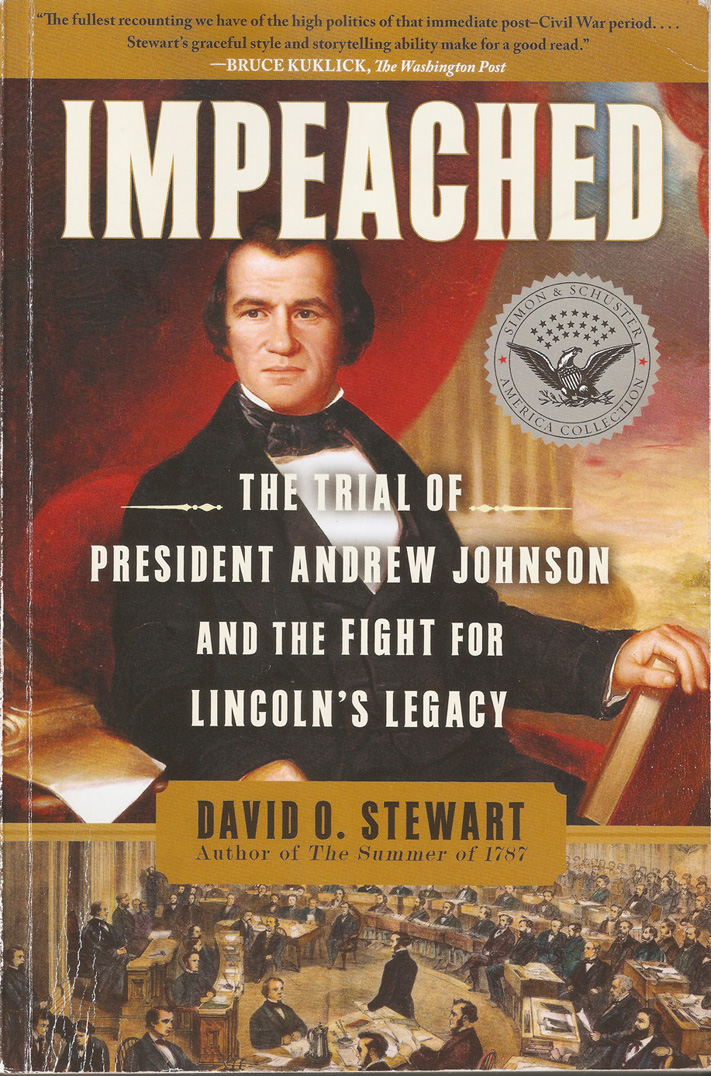
“Impeached: The Trial of President Andrew Johnson and the Fight for Lincoln’s Legacy,” by David O. Stewart
All this is described in great detail in “Impeached: The Trial of President Andrew Johnson and the Fight for Lincoln’s Legacy,” a book by David O. Stewart. This is one of many books on the impeachment of Johnson. Other books cover the impeachment proceedings against Richard Nixon and Bill Clinton, and many other books cover the impeachment cases against all three. I really liked Stewart’s book on Johnson’s impeachment. I found it to be comprehensive, and even a bit suspenseful. The author shows that the trial was both a judicial proceeding and a political exercise. He also explains that impeachment is rooted in British law and had been included in the U.S. Constitution as a stopgap measure against tyrannical rule. (Note: At the time our founding fathers wrote the Constitution, there were no political parties!) I think the author of this book did a good job of placing the impeachment into the context of the times. Our country had never been so divided, and the whole matter was tragic. A quote from the book: “Andrew Johnson was an unfortunate president, an angry and obstinate hater at a time when the nation needed a healer. Those who opposed him were equally intemperate in word and deed. It was an intemperate time.”
Here are a few more notes on the impeachment of Andrew Johnson:
There was no Vice President at this time, so had Andrew Johnson been convicted in the Senate and removed from office, Benjamin Wade of Ohio, as President Pro Tem of the Senate, would have become president. In the time leading up to and during the trial, those seeking government jobs inundated Wade with requests.
The author makes a strong case that many of the Senators who voted to acquit had been bribed.
The two Senators from Michigan voted to convict.
Republicans from the House led by Thaddeus Stevens and Benjamin Butler acted as prosecutors. Stevens was an elderly, fire-breathing, anti-slavery “radical.”
This had been the third attempt to impeach Andrew Johnson. There was also a fourth attempt, which went nowhere.
Before Johnson, the only other president to face the possibility of impeachment had been John Tyler. It would not happen again until Nixon, who resigned before a House vote on impeachment. Clinton was also impeached but was acquitted in his Senate trial, which was presided over by Chief Justice William Rehnquist. Clinton faced two articles of impeachment, for lying to a grand jury and for obstruction of justice.
Impeachment might happen again. In my view, having read about the trial of Andrew Johnson and how that all unfolded, getting to two-thirds (67 votes) in the Senate to oust the current president seems far from likely.
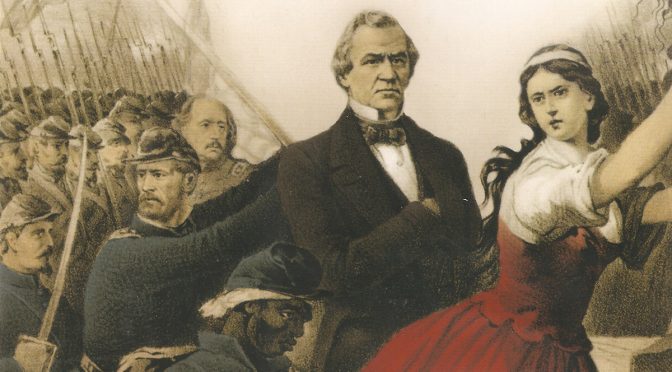
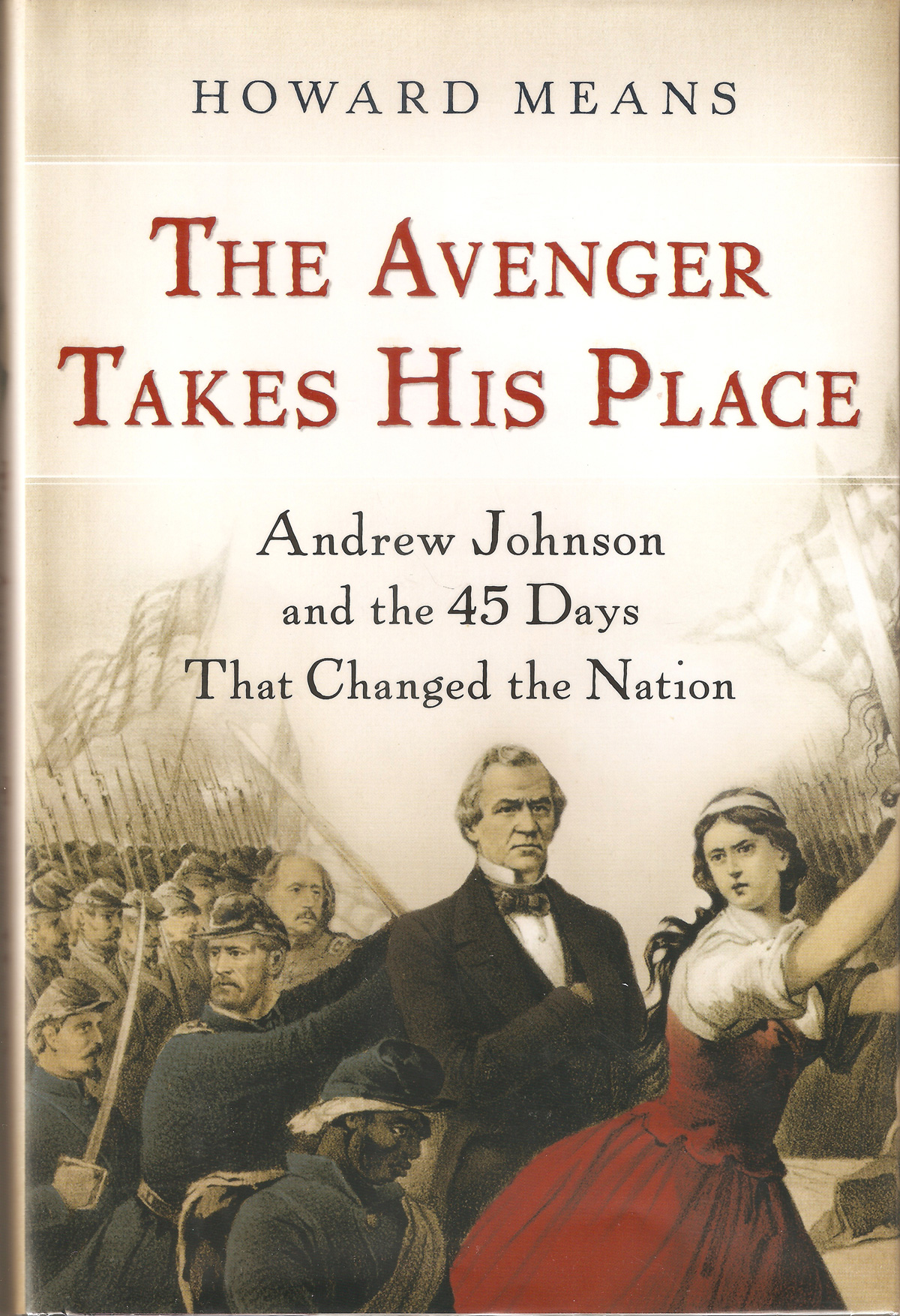
If I’m going to cry while reading a presidential biography, that usually happens when I get to the end. This book, by Howard Means, brought tears to my eyes at the beginning. It opens with a vivid, minute-by-minute description of the events of April 14 and 15, 1865. The assassination of Abraham Lincoln by the vile racist John Wilkes Booth was part of a conspiracy, with Booth as the ringleader, in which Vice President Andrew Johnson, Secretary of State William H. Seward, and General Ulysses S. Grant were all to be killed on the same night.
Lee had surrendered to Grant at Appomattox just days earlier, on April 9, effectively ending the Civil War, but the conspirators had somehow hoped that decapitating the leadership of the U.S government would throw everything into chaos, thus enabling the South to reignite the war. It was a far-fetched idea, which did not work out as planned and had disastrous consequences for everyone.
The Lincolns had invited Grant and his wife to accompany them to Ford’s Theater that fateful night, and their attendance together had even been published in newspapers. But the Grants declined the invitation at the last minute and departed by train on a family trip to New Jersey. Booth was a well-known actor who was able to gain access to the theater. He also knew the exact moments during “Our American Cousin” when the audience would laugh, thus helping him sneak into the presidential box to fire the fatal bullet. Meanwhile George Atzerodt, the guy who was supposed to kill Johnson at his room at Kirkwood House, did not show up. He spent time that night on a barstool and either got drunk and forgot, or simply chickened out. The author speculates that had Atzerodt found the courage to attack the belligerent Johnson that night, the confrontation would not have ended well for the attempted assassin.
Lewis Powell, however, did in fact show up to kill Seward, who had recently been in a carriage accident and was recuperating at home in bed. Powell showed up at the house and told family members that he was delivering medicine. When Seward’s son Frederick refused to let him upstairs, Powell pistol whipped him and stormed into the Secretary of State’s room. His gun had jammed, so he pulled a knife and stabbed Seward, in a grisly attack with blood everywhere, before fleeing on horseback. By some miracle, Seward survived the assassination attempt.
All this takes place in the first (and best) chapter of “The Avenger Takes His Place: Andrew Johnson and the 45 Days That Changed the Nation.” The title is taken from a line in a poem by Herman Melville, written in that era, which evokes the feelings many had at the time. Despite the “malice toward none” and “charity for all” that Lincoln had promised in his second inaugural, many wanted to see the South punished after the war. These sentiments were very real, as the author of “The Avenger” describes, by citing personal letters written at the time, quotes from newspaper editorials — and even descriptions of what preachers were saying to congregants in their sermons in churches.
While this book was definitely insightful, especially in describing the mood of the country at the time of Lincoln’s assassination and its aftermath, I still feel I could learn more about the 17th president — especially his dealings with Congress and his impeachment trial in the Senate. This book by Means is the second one I have read about Andrew Johnson. The other was by Annette Gordon-Reed. Both Means and Gordon-Reed make frequent references to an earlier biography, by Hans L. Trefousse, a copy of which I recently found at The Strand bookstore here in NYC. But I subsequently moved on to Ronald C. White’s excellent biography of Grant (with yet another book review coming very soon), and I am now taking a detour by reading the biography of yet another famous general. So I will return to Andrew Johnson at another time.