The 2019 Midwinter Meeting in Chicago

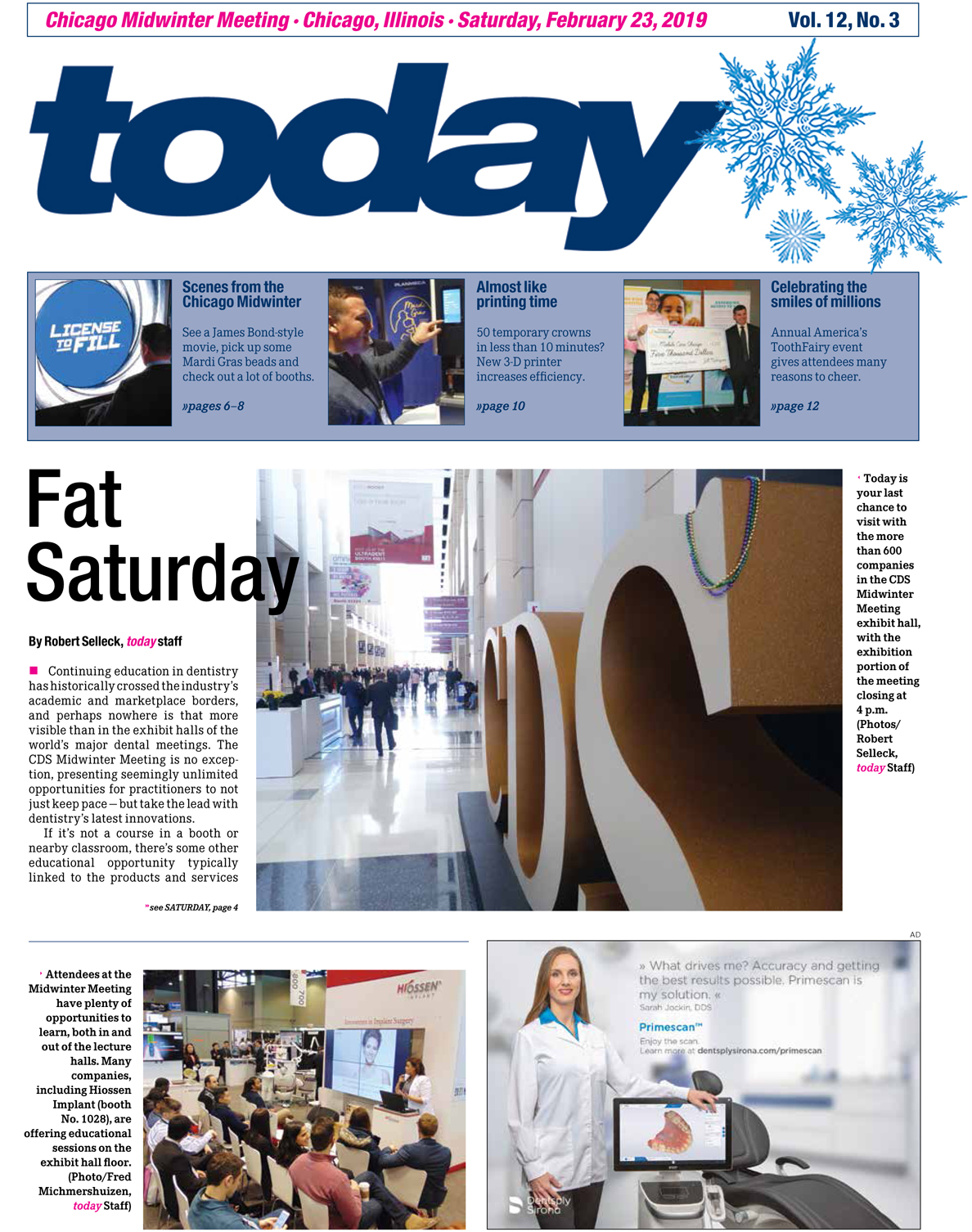
If it’s late February, that means a trip to Chicago for the annual Midwinter Meeting, held by the Chicago Dental Society. As part of the team of editors from Dental Tribune, I helped publish three issues of our at-show newspaper, called “today” — the last two of which were “live” issues that were printed overnight from on site.

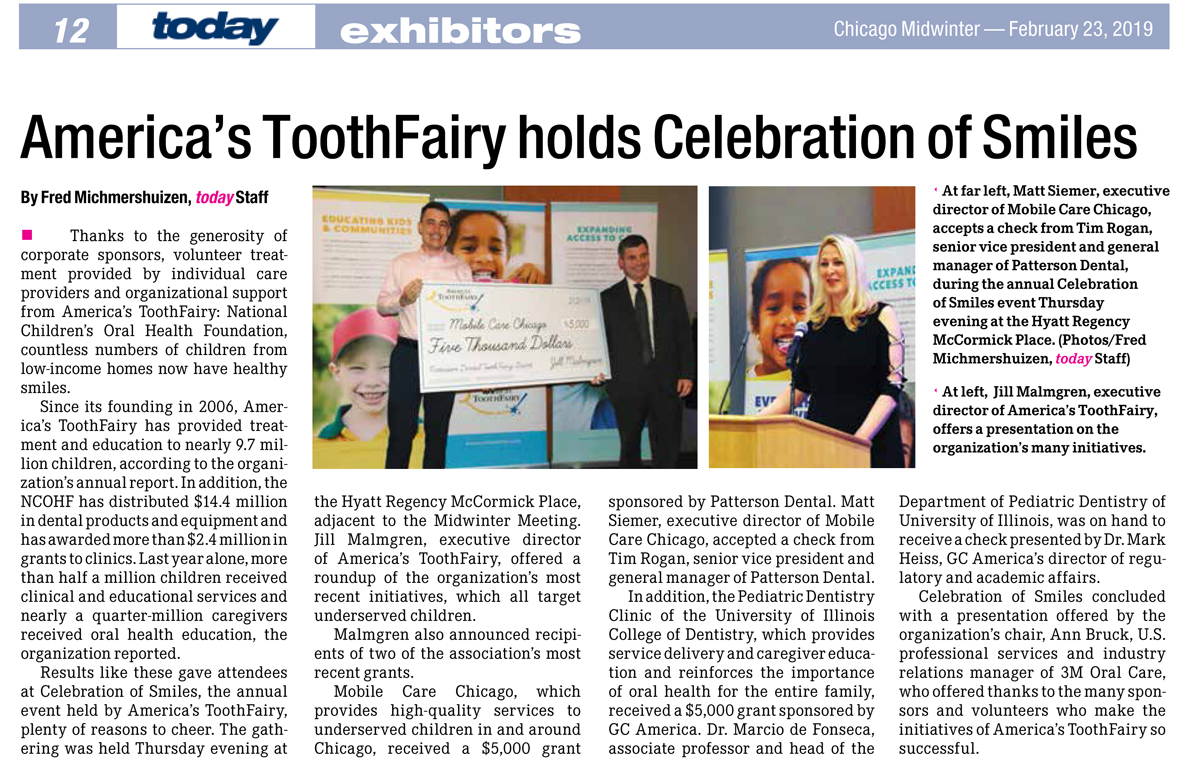
My editorial assignments at the event included taking dozens of photographs for our photo gallery, a sample of which is shown directly below. An online version of the photo gallery is published to the Dental Tribune website (direct link here). I also attended a press briefing conducted by Henry Schein Dental and wrote an article (here), and I also attended the annual “Celebration of Smiles” event, held by America’s ToothFairy: National Children’s Oral Health Foundation and wrote about that as well (article here).

Articles by Fred Michmershuizen

article by Fred Michmershuizen


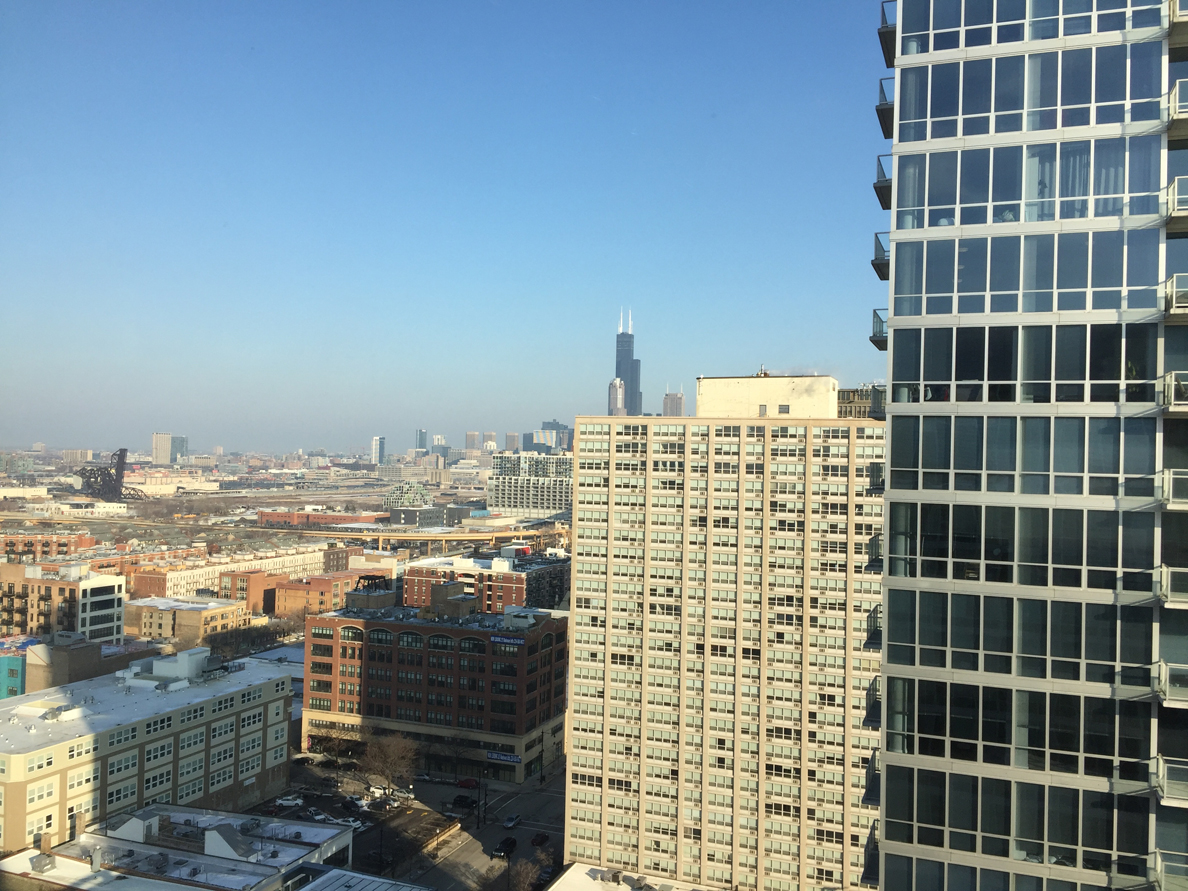
We stayed at the Hilton Garden Inn, located directly across the street from McCormick Place. I arrived Wednesday afternoon, worked pretty much all day Thursday and Friday, and flew home on Saturday. There was no time for fun or sightseeing, but here is a picture I took looking out the hotel room window! It’s not the best view, but if you look closely you can see the Willis Tower:

Fred Michmershuizen

Ready Teddy

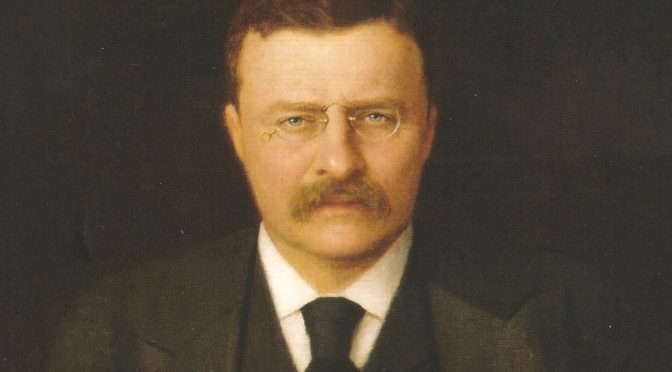
Even before he became our nation’s 26th President in September 1901 at the young age of 42, Theodore Roosevelt had accomplished more than most people could in multiple lifetimes. He was a self-taught natural historian, a respected expert on naval warfare, a reform-minded civil servant, a police commissioner, an author, a rancher, a politician and a military hero. Historian Edmund Morris describes all this and more in the first volume of a three-volume biography. After a short prologue, this first book in the set — called “The Rise of Theodore Roosevelt” — covers Theodore Roosevelt’s jam-packed life before he became president. It’s an informative, entertaining and gripping narrative, and I found it an absolute pleasure to read.
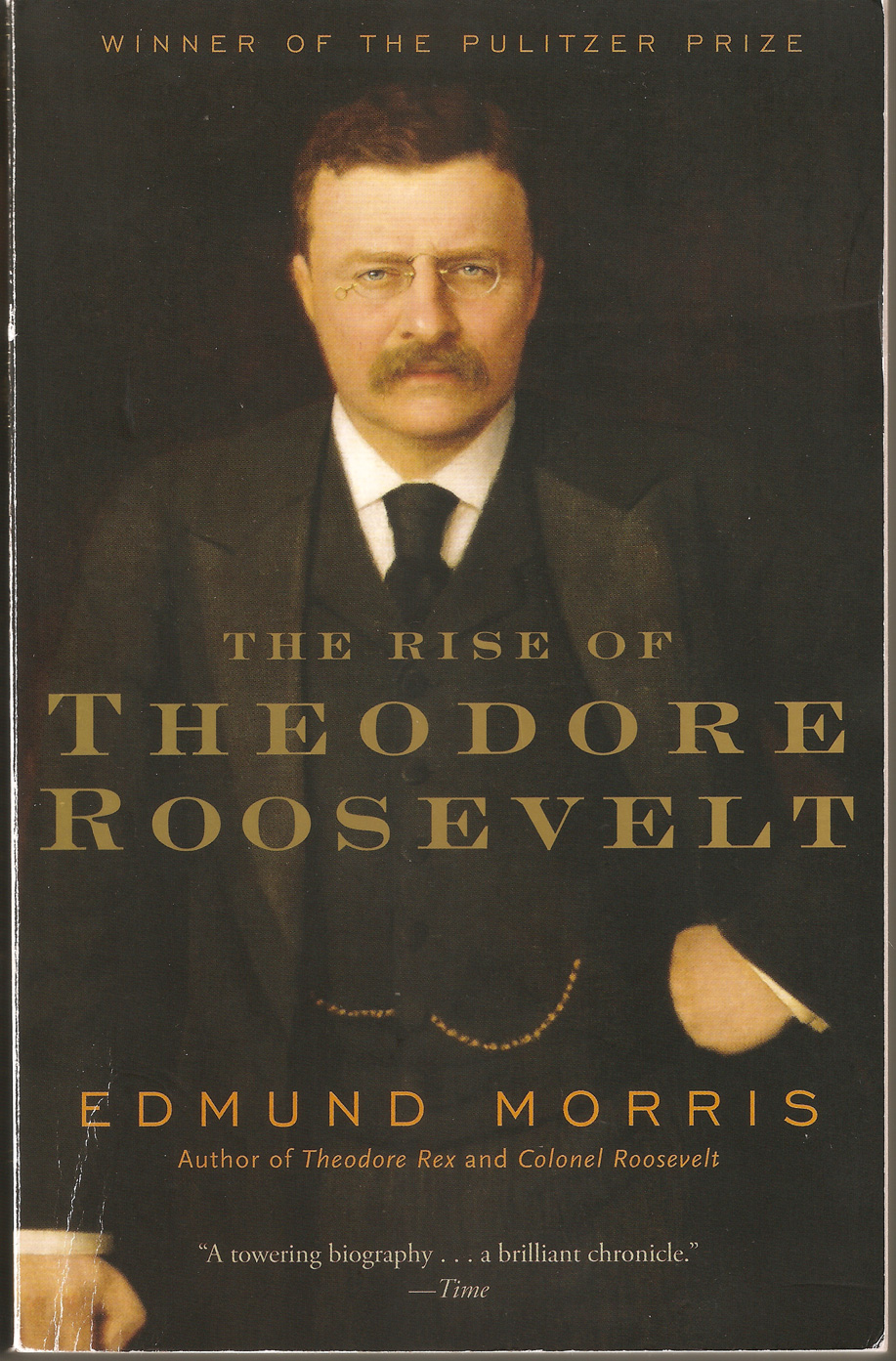
book review by Fred Michmershuizen


A physician told Theodore Roosevelt early in his life that he had a weak heart. The doctor recommended the cocky young man take a sedentary desk job. It was advice that Theodore Roosevelt ignored. He had been a sickly child who suffered from asthma, but that did not stop him. He exercised his body and even learned how to box. As a curious boy, little “Teedie” studied insects, birds and small animals. He taught himself how to perform taxidermy, and he started preserving specimens of animals he caught or killed. He called his collection the Roosevelt Museum of Natural History.

The Roosevelt family was large and wealthy. Theodore Roosevelt’s father, Theodore Roosevelt Sr., was a merchant. The senior Roosevelt was nominated by President Hayes to replace Chester A. Arthur as head of the New York Customs House, in Hayes’ dispute with Senator Roscoe Conkling over civil service reform. The elder Roosevelt’s nomination was then rejected by the U.S. Senate, leaving a bad taste in the Roosevelt family’s mouth over politics.

Theodore Roosevelt Sr. took his whole family overseas twice when “Teedie” was young. They traveled all over Europe and Egypt. One of the overseas trips lasted more than a year. Along the way Roosevelt learned French and German. Back home, Roosevelt went to Harvard and then later went to law school. But he did not like law school and instead decided, against the wishes of his relatives, to try his hand at politics. In this era, it was not common for someone of Roosevelt’s social standing to enter politics.

He served three terms in the New York State Assembly in Albany. At this time, future U.S. President Grover Cleveland, a Democrat, was governor. In the Assembly Roosevelt developed a reputation as a reformer bent on rooting out corruption. In 1886 Roosevelt ran for Mayor of New York City but lost. He then went on to serve in the federal government in Washington, D.C., on the Civil Service Commission, appointed by President Benjamin Harrison. Again in this role he waged battles against corrupt and incompetent jobholders and officeholders. When Grover Cleveland became president for the second time, Roosevelt stayed on for a time in the same job. Later he became Police Commissioner in New York City, serving on a four-man panel for two tumultuous years. In this role, he further cemented his reputation as a reformer, someone who was not afraid to buck the system. To everyone’s shock and horror, he enforced the city’s no-booze-on-Sundays law. He also would sneak out late at night and pounce on cops who were sleeping on the job, scaring and embarrassing them to get back to work.

When Theodore Roosevelt was still in college, his father died, leaving him an inheritance that would have allowed him to live modestly for the rest of his life as an academic or author. He had a childhood sweetheart, Edith Kermit Carow, but he spurned her and instead married a socialite, Alice Hathaway Lee, with whom he had a daughter, Alice. But his first wife died, tragically on the very same day as Roosevelt’s mother, in the same house. Roosevelt later married a second time, this time to Edith, and they had several more children. Their wedding took place in London.

Theodore was close to a sister, Anna, aka “Bamie,” who raised the younger Alice after her mother died. His older brother, Elliott, was troubled and eventually died of alcoholism. According to the book, Elliott fathered an illegitimate child with a woman who was not his wife and the family likely made hush money payments to keep the story out of the press.

After his first wife and mother died, Theodore Roosevelt spent much time in the Badlands of the Dakotas, where he went on many hunting trips and became a rancher. He invested a large portion of his inheritance on cattle, hiring others to run things, but unfortunately this venture was ultimately unsuccessful. During one particularly harsh winter, most of his herd died. During one especially memorable incident out west, he caught three men who had stolen a boat, an adventure that took him hundreds of miles and lasted several weeks.

As if this all weren’t enough, Roosevelt also wrote many books. Among the titles he published before he became president were “The Natural History of Insects,” “History of New York City,” “The Winning of the West” and “Ranch Life and the Hunting Trail.” His book on warships, “The Naval War of 1812,” was considered authoritative. He also wrote multiple books about birds, plus three biographies — of Gouverneur Morris, one of America’s founding fathers, Senator Thomas Hart Benton, proponent of “Manifest Destiny,” and Oliver Cromwell, the English historical figure.

Oh, and he also climbed the Matterhorn!

Here are a few more facts about Theodore Roosevelt:

  • Born in a New York City townhouse! It’s located at 28 E. 20th Street — just blocks from where I live!
  • When he was a boy, he watched from a window as the funeral procession of Abraham Lincoln passed through the streets of New York City.
  • He wore spectacles and had big, flashy teeth.
  • He liked to fight.
  • When he got to work each morning, whether at the state capitol in Albany or the civil service department in Washington or police headquarters in Manhattan, he often ran up the steps. He was that energetic.
  • He was the youngest to ever become president, when he was 42. (JFK was the second youngest to become president as a 43-year-old.)
  • Theodore Roosevelt was related to both Eleanor Roosevelt and Franklin D. Roosevelt. Eleanor was his niece (daughter of his older brother Elliott), and Franklin was a distant cousin.

During President William McKinley’s first term, Theodore Roosevelt became Assistant Secretary of the Navy. But the secretary he served under was old and lazy and went on long vacations, leaving Theodore Roosevelt to run amok. He drafted war plans, agitated for war with Spain — and got George Dewey sent to command the U.S. fleet in Asia, a move that would later have immense consequences on world events. When war was declared with Spain over its occupation of Cuba, Dewey attacked the Spanish fleet in the Philippines, sinking it, which caused the United States to take over the Philippines as a protectorate. This went just as Theodore Roosevelt had planned!

The minute war was declared with Spain, Theodore Roosevelt resigned his post in the Naval Department and joined the U.S. Army. He helped found the First United States Volunteer Cavalry, nicknamed the Rough Riders, to fight in Cuba, in what would become known as the Spanish American War. The Rough Riders was a mounted regiment that included a ragtag band of outdoorsmen, cowboys and ranchers, plus a bunch of Roosevelt’s friends from college. Roosevelt was second in command, as lieutenant colonel, but later he was promoted to colonel. While in Cuba, Roosevelt was involved in two key battles — Las Guasimas and San Juan Hill — in which he led troops under enemy fire. Roosevelt fought bravely, if recklessly, leading a charge up Kettle Hill. Many around him were killed or maimed. He would for the rest of his life be called Colonel Roosevelt.

Returning to New York a genuine war hero, Roosevelt ran for Governor of New York State and won, again with the idea of instituting reforms to root out corruption. He instantly began clashing with the powerful Senator from New York, Thomas C. Platt, who was a Republican Party heavyweight at the time.

Meanwhile McKinley’s vice president, Garrett Hobart, had died, leaving an opening on the Republican ticket for the election of 1900. According to the book, Platt arranged to have Roosevelt nominated as the vice presidential candidate for what would have been McKinley’s second term, largely to get Roosevelt out of his way. With the economy booming and war with Spain won, the McKinley-Roosevelt ticket sailed to victory that November. Less than a year later, in September 1901, when McKinley was shot in Buffalo, Roosevelt rushed to his bedside. But it soon looked like McKinley was going to recover, so Roosevelt took his family on vacation. The thinking was that by doing so, he would reassure the American people that their president was going to recover and that everything would be OK. But it did not turn out that way. Roosevelt was climbing Mount Marcy, in a remote location in the Adirondacks, when a messenger arrived with a telegram that McKinley was near death.

And that’s where this book leaves off.

It was a dramatic ending. In reading this book, I learned so much and developed a number of key insights about Theodore Roosevelt, the man.

First, I was struck by his tremendous energy and vigor. He could run circles around just about anyone, both physically and intellectually. He seemed immune to discomforts such as cold weather, rain or snow, hunger or fatigue. The author does not mention this, but reading between the lines it almost seems that Roosevelt might possibly have been bi-polar. He also had immense political skills and a flair for the dramatic. He was able to communicate with people from all walks of life, from rich aristocrats to ranchers out west.

Then of course is Roosevelt’s desire for reform. In all of his public service jobs, he became known as someone who was going to turn over rocks, to ask hard questions, to enforce the law. As an assemblyman, as a civil service commissioner and as a police commissioner, he went after corruption and bucked the system. He did not care if he was caricatured in the press or if power brokers mocked him. Sometimes his efforts at reform were successful, other times not.

Finally and most importantly is Roosevelt’s view of the United States and its role in the world. If you think of the word “jingoism,” think of Theodore Roosevelt. For better or worse, Roosevelt envisioned nothing but greatness for our country, and having a strong navy, and control of the seas, was key to building a world empire as he envisioned it. He wanted our nation to exert power on the world stage, starting with driving the last of the European colonizers out of the Western Hemisphere once and for all. He wanted the United States to finally build a canal, long envisioned, through the Central American isthmus. And he wanted Americans to continue to settle the great American West.

As Morris writes, when Roosevelt became president at the dawn of a new century the United States was poised to become a superpower. It already had enormous economic strength and had the potential for great military might. What will Theodore Roosevelt do as president? I’ve already started into “Theodore Rex,” the second book in this series by the same author, which covers TR’s White House years. There’s so much more to learn about this colossus of a man.


Presidents who served two full terms of office

Twelve U.S. presidents served two complete, consecutive, four-year terms of office. They are:

  • George Washington
  • Thomas Jefferson
  • James Madison
  • James Monroe
  • Andrew Jackson
  • Ulysses S. Grant
  • Woodrow Wilson
  • Dwight D. Eisenhower
  • Ronald Reagan
  • Bill Clinton
  • George W. Bush
  • Barack Obama

Here are some other notes about presidential terms of office:

  • One president, Grover Cleveland, served two complete, but non-consecutive terms.
  • And one president, Franklin D. Roosevelt, served three complete terms and was elected and began serving a fourth term. FDR died in office during his fourth term.
  • After Andrew Jackson left office in 1837, it would be 32 years and 10 presidents before the next two-termer, Grant, took the oath in 1868. Then after Grant left office after his second term ended in 1877, it would be 36 years and nine presidents before the next two-termer, Wilson, became president in 1913.
  • And since Reagan was inaugurated in 1981, there has only been one one-term president, George H.W. Bush.

I put this information together for my friend Steve’s “Never Stop Learning” series that he is posting to Facebook.

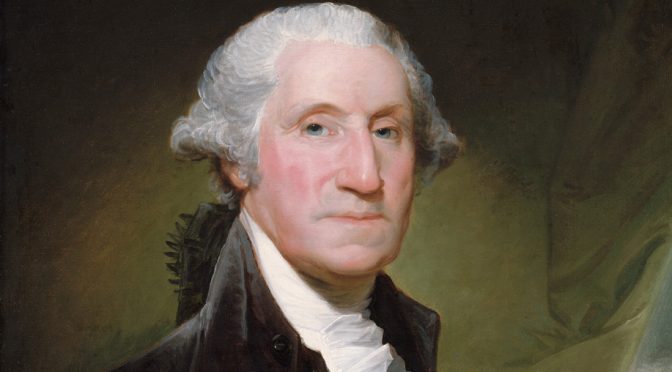
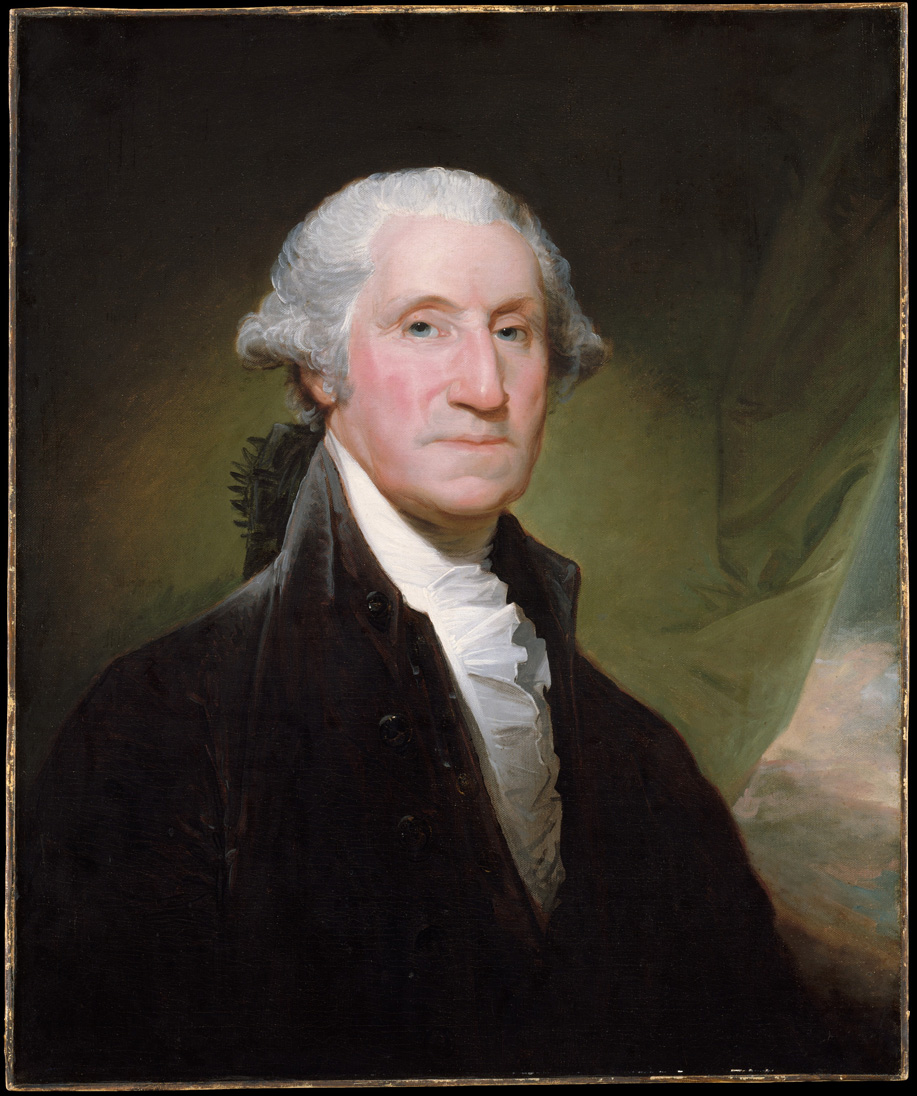
This portrait of George Washington is by Gilbert Stuart and dates from 1795:

President George Washington, Gilbert Stuart (1795)

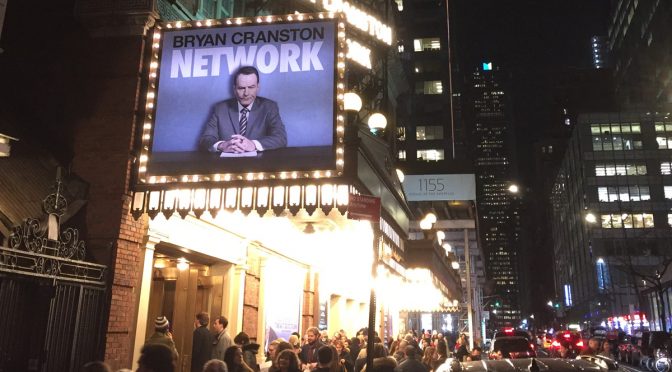
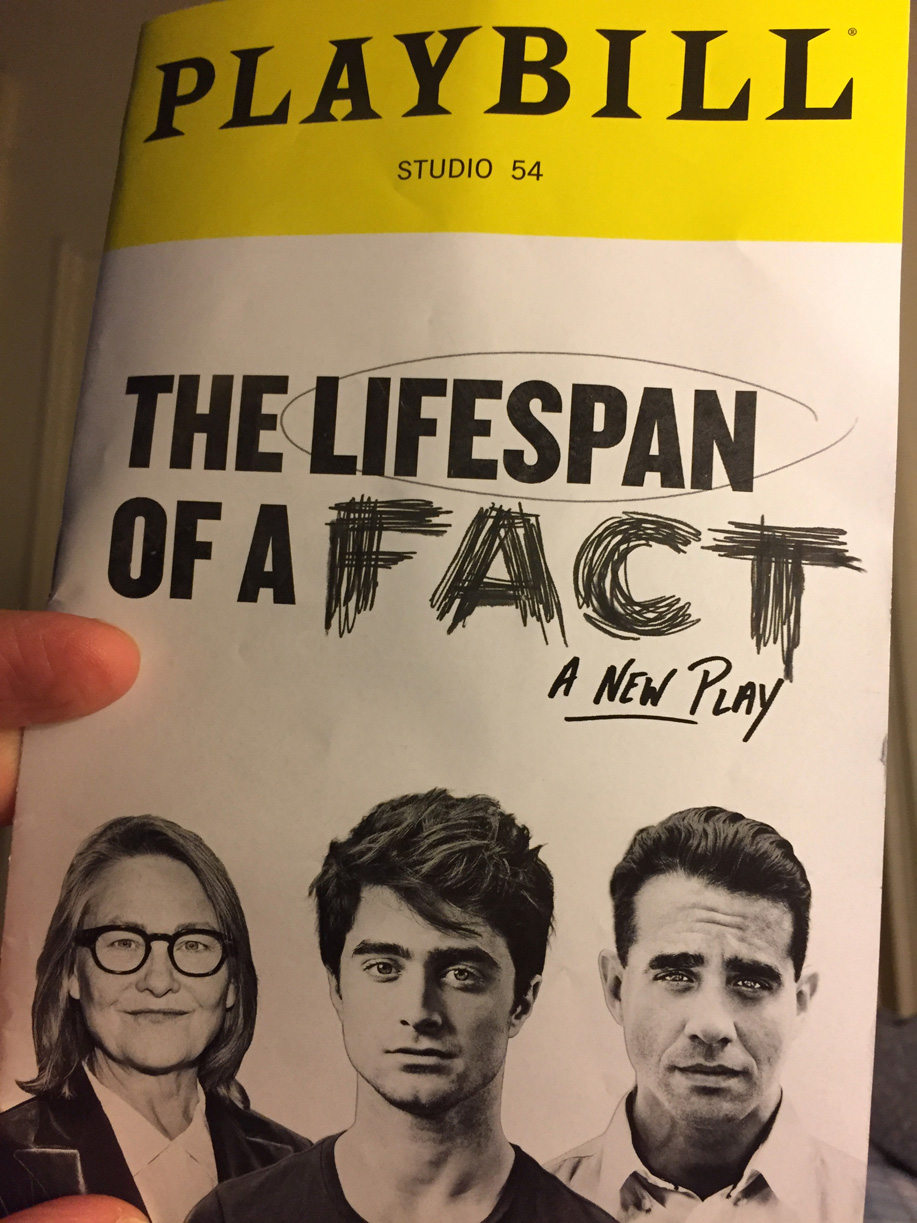
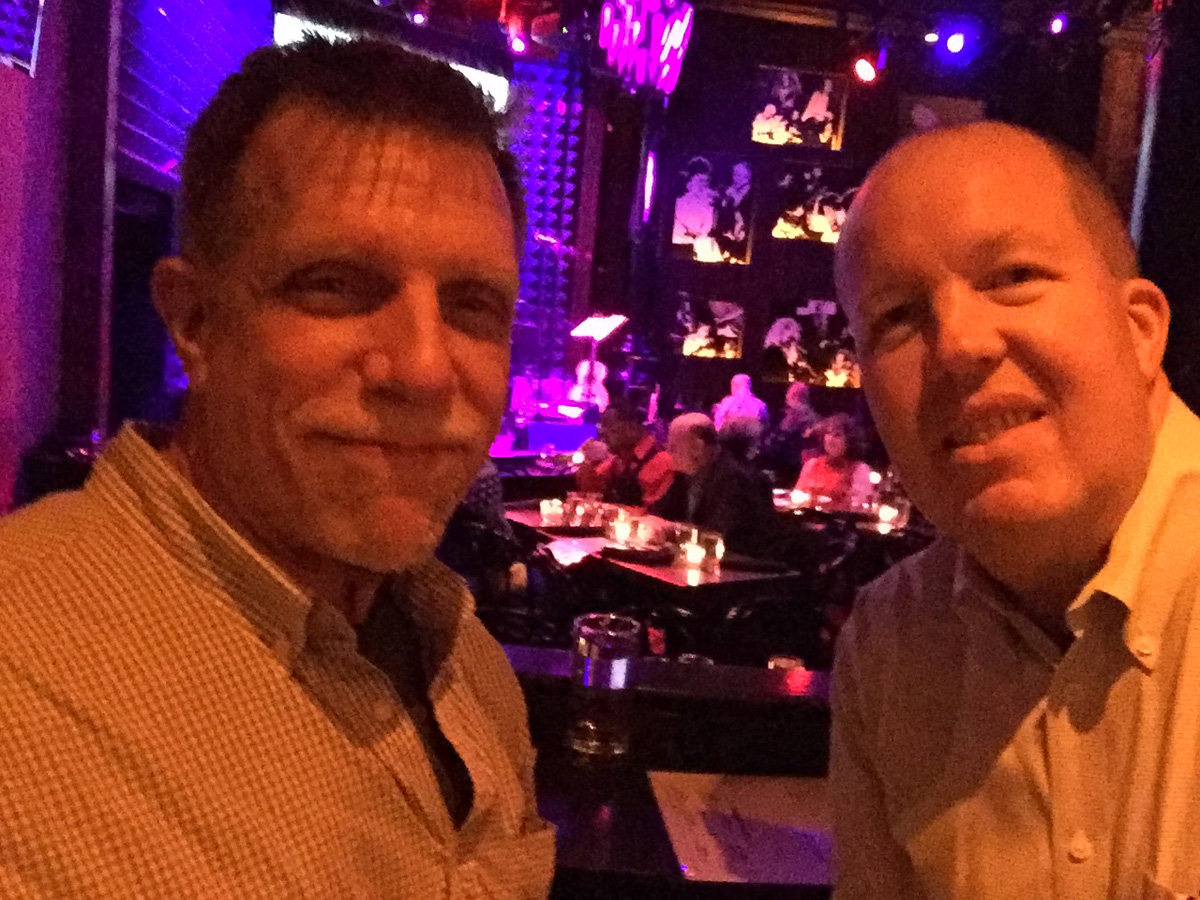
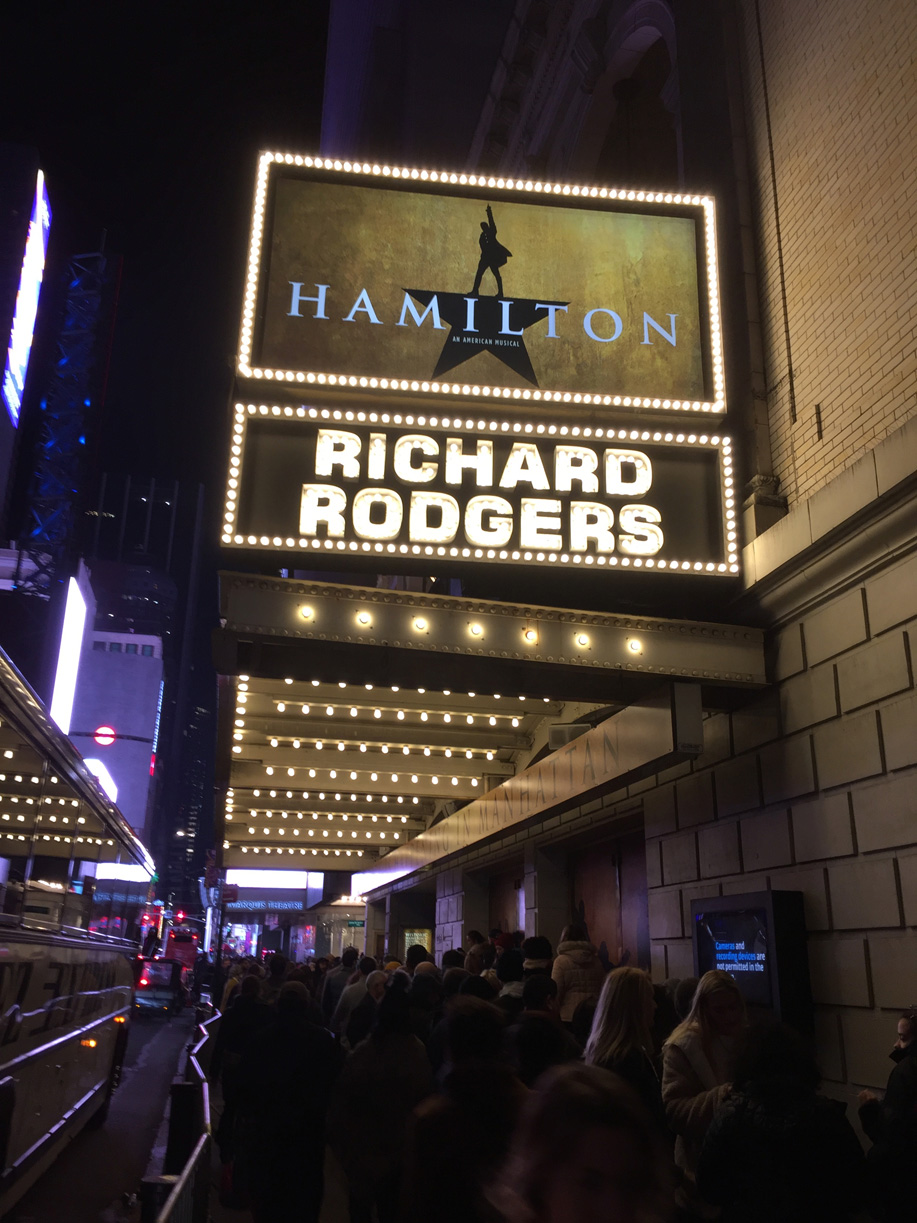
Recent shows include ‘Hamilton,’ ‘Mockingbird’ and ‘Network’

Over the holiday break I caught a number of shows, starting with “Lifespan of a Fact” just after Christmas at Studio 54 on Broadway, starring Daniel Radcliffe, Cherry Jones and Bobby Cannavale, which I saw with my friend Franklyn.

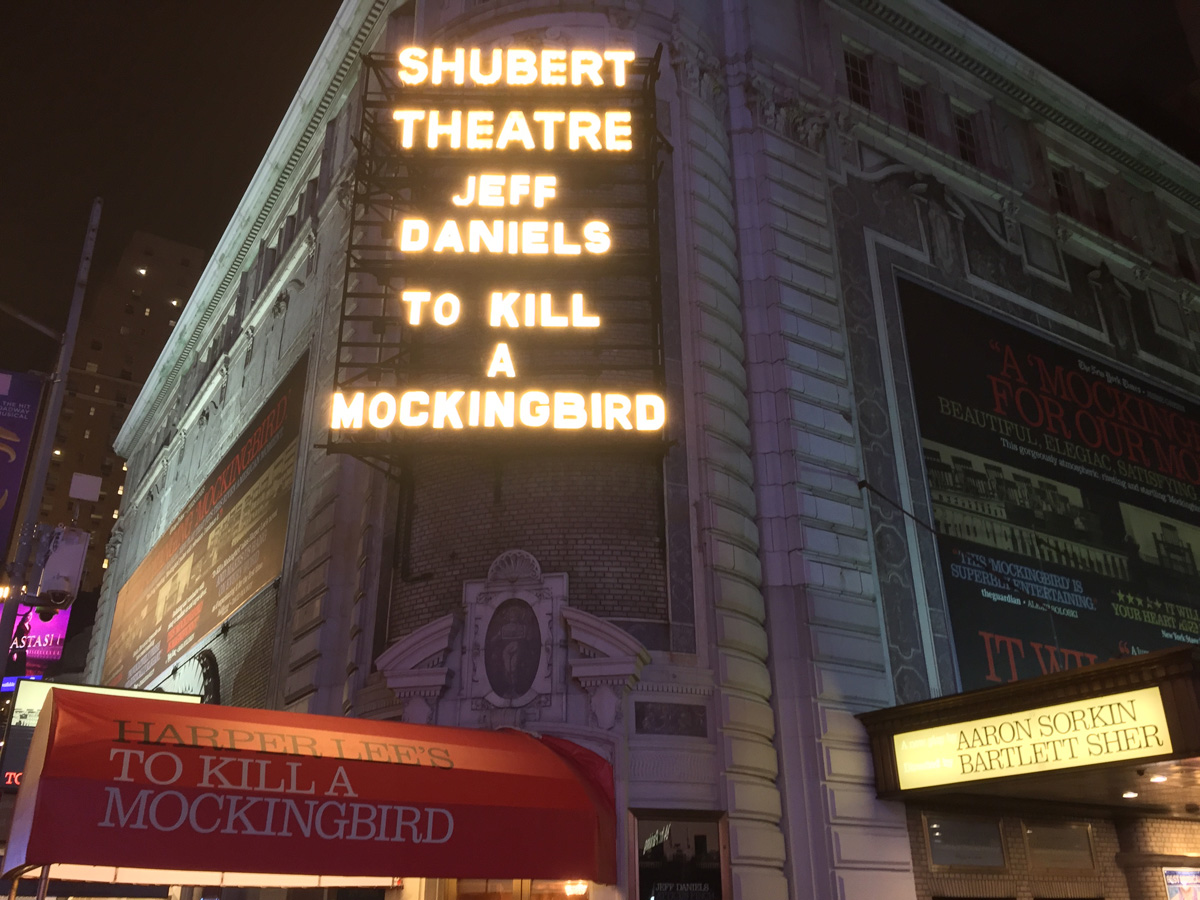
Then New Year’s weekend, I attended a trifecta of shows, starting with “Sandra Bernhard: Quick Sand” at Joe’s Pub with my friend Bob; “Hamilton” also with Bob; and “To Kill a Mockingbird” starring Jeff Daniels, which I attended alone. It was my second time seeing “Hamilton,” which was a last-minute miracle. I won front row tickets for 10 dollars each on the official Hamilton app.

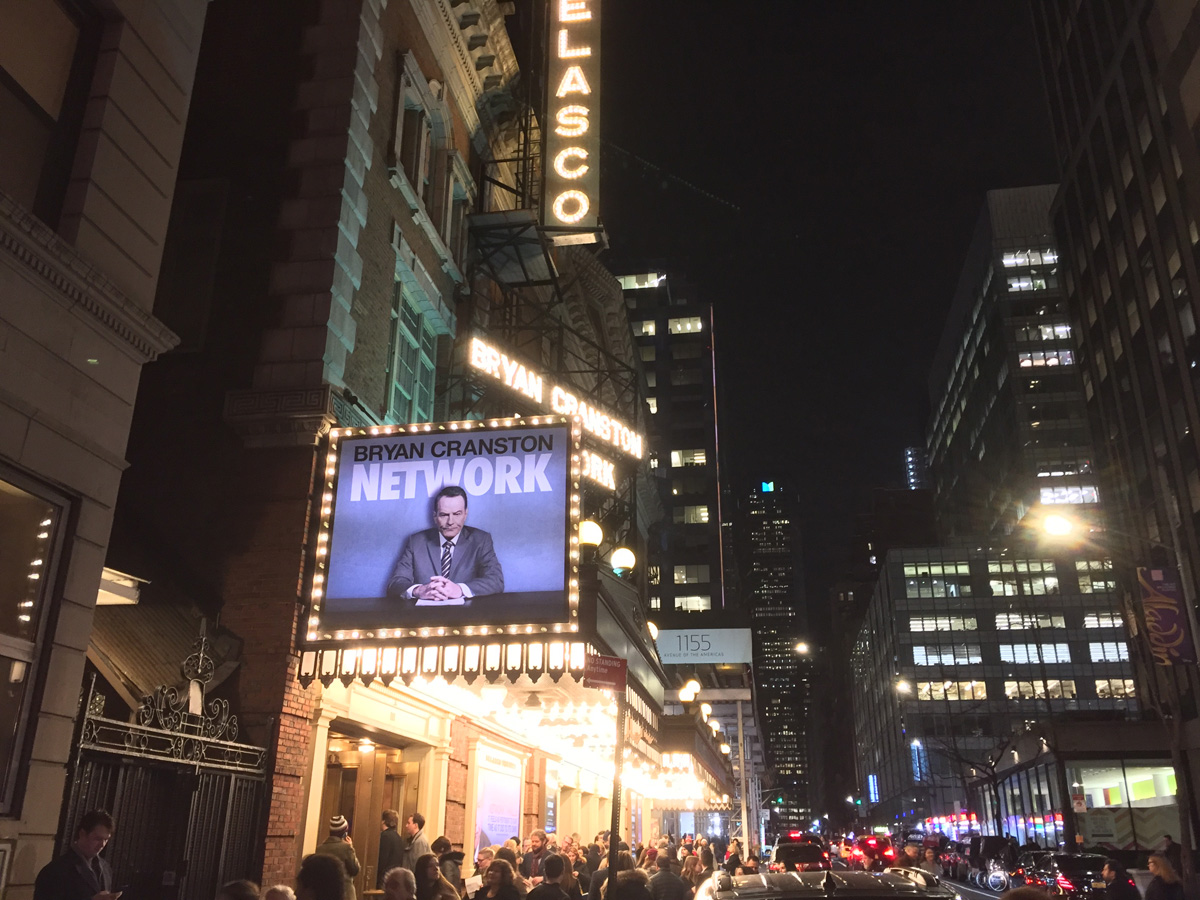
Then last Friday I caught “Network” starring Bryan Cranston at the Belasco with my friend Jay.

Fred Michmershuizen

Sarah Vowell’s ‘Assassination Vacation’

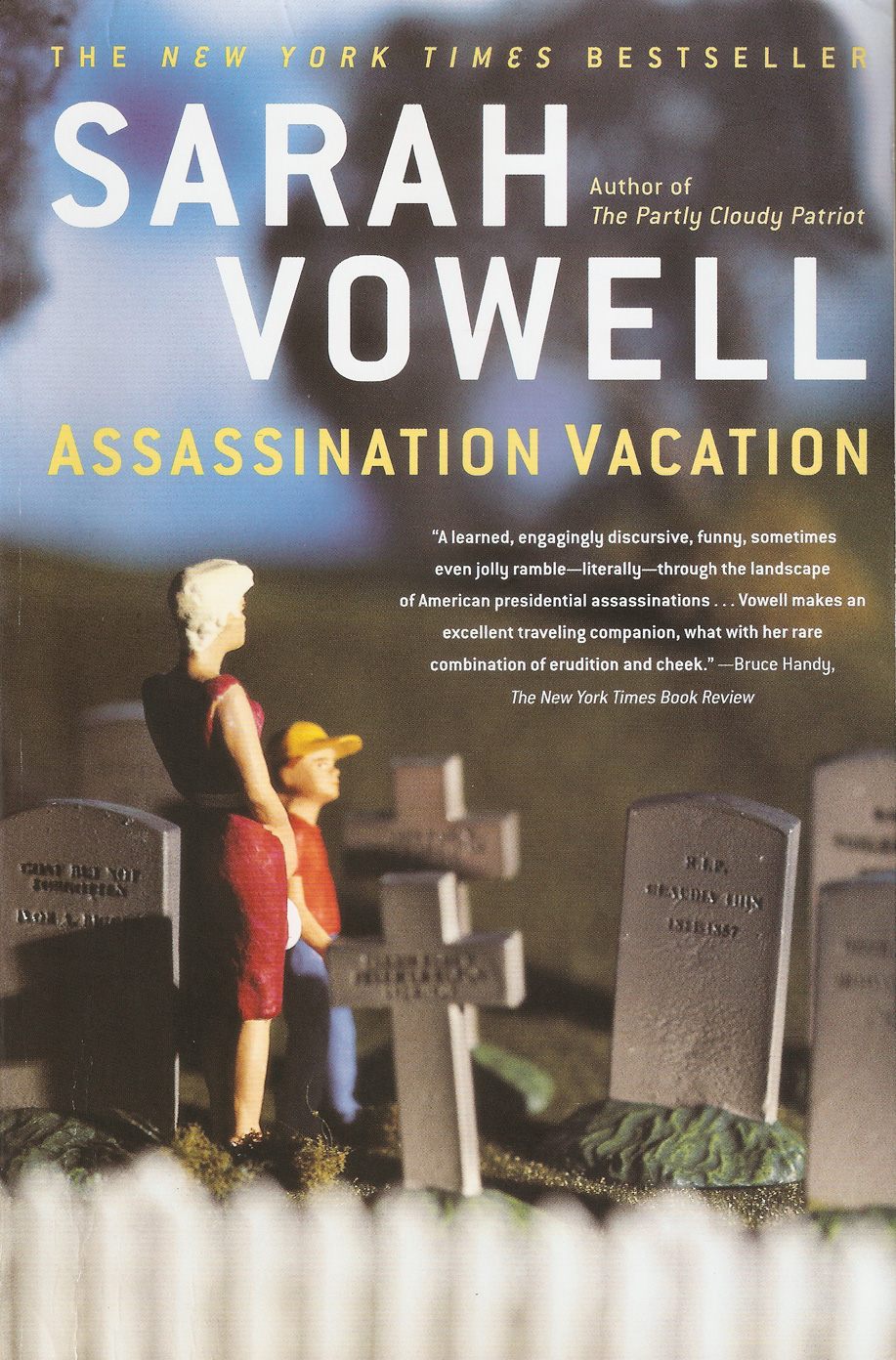
review of Sarah Vowell’s ‘Assassination Vacation’In “Assassination Vacation,” Sarah Vowell writes in the first person about visiting various historical sites relating to the assassinations of Presidents Lincoln, Garfield and McKinley. She travels extensively, as far away as the Dry Tortugas, where Dr. Mudd was imprisoned in the 1860s. She stops by to examine plaques in locations at which incidents of historical significance took place, she goes on guided tours, she visits museums and universities, and she offers many clever insights. It’s an entertaining book to read. It was published in 2005, which is before smart phones and GPS technology. It’s also during the height of George W. Bush’s war in Iraq, and the author sprinkles in plenty of criticism of the then current president into her narrative.

For me, “Assassination Vacation” was even more interesting for two reasons. First, I recently finished reading biographies of our nation’s first 25 presidents, three of whom were assassinated. So I was familiar with many of the names and events described. And second, I happen to live near Gramercy, Madison Square and Union Square parks, which are among the locations mentioned often in the book.

The author offers a number of keen observations. One of them is that Robert Todd Lincoln, President Lincoln’s oldest son, was present at the assassinations of not only his father but also of those of Garfield and McKinley. (She jokingly refers to him as “Jinxy McDeath.”) Another is that Lincoln’s last conscious moment was likely one of laughter. That’s because John Wilkes Booth, an actor who knew the play “Our American Cousin” by heart, waited for the exact moment at which a line that would have elicited audience laughter to fire his gun. She surmises that Lincoln himself therefore would have been laughing when he was shot. Another fun notation she makes is that the powerful Senator from New York, Roscoe Conkling, was arguably more famous than President Chester A. Arthur, as evidenced by the inscriptions at the bases of their respective statues in Madison Square Park. Conkling’s, she points out, just gives his name while Arthur’s states that he was 21st President. I’ve walked by these statues hundreds of times and never considered this juxtaposition.

She devotes one chapter each to Lincoln, Garfield and McKinley, then she concludes with a chapter on the architectural design of the Lincoln Memorial. She also ties in Kennedy’s assassination and the famous Lincoln-Kennedy coincidences. It’s this last chapter, which concludes with the dedication of the Lincoln Memorial, taking place in 1922, that is the most poignant. Robert Todd, who by that time was an old man, was present for that as well. It brought a tear to my eye.

If I ever write a book myself about the presidents and someday I just might, I hope that it would be as fun, informative and heart-warming as “Assassination Vacation.”

New Year’s Eve Eve in Times Square

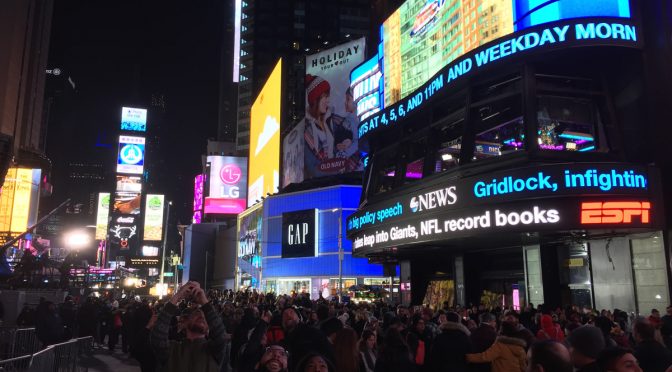
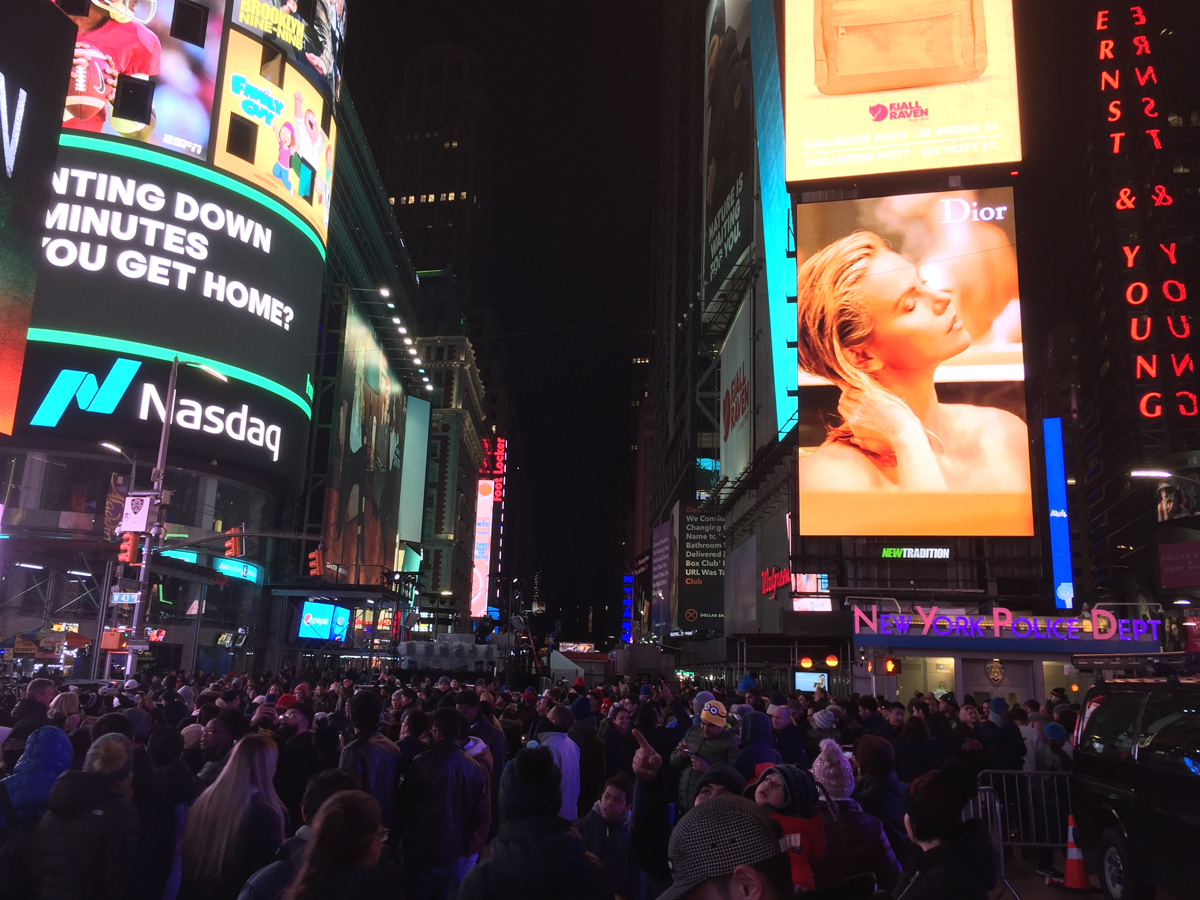
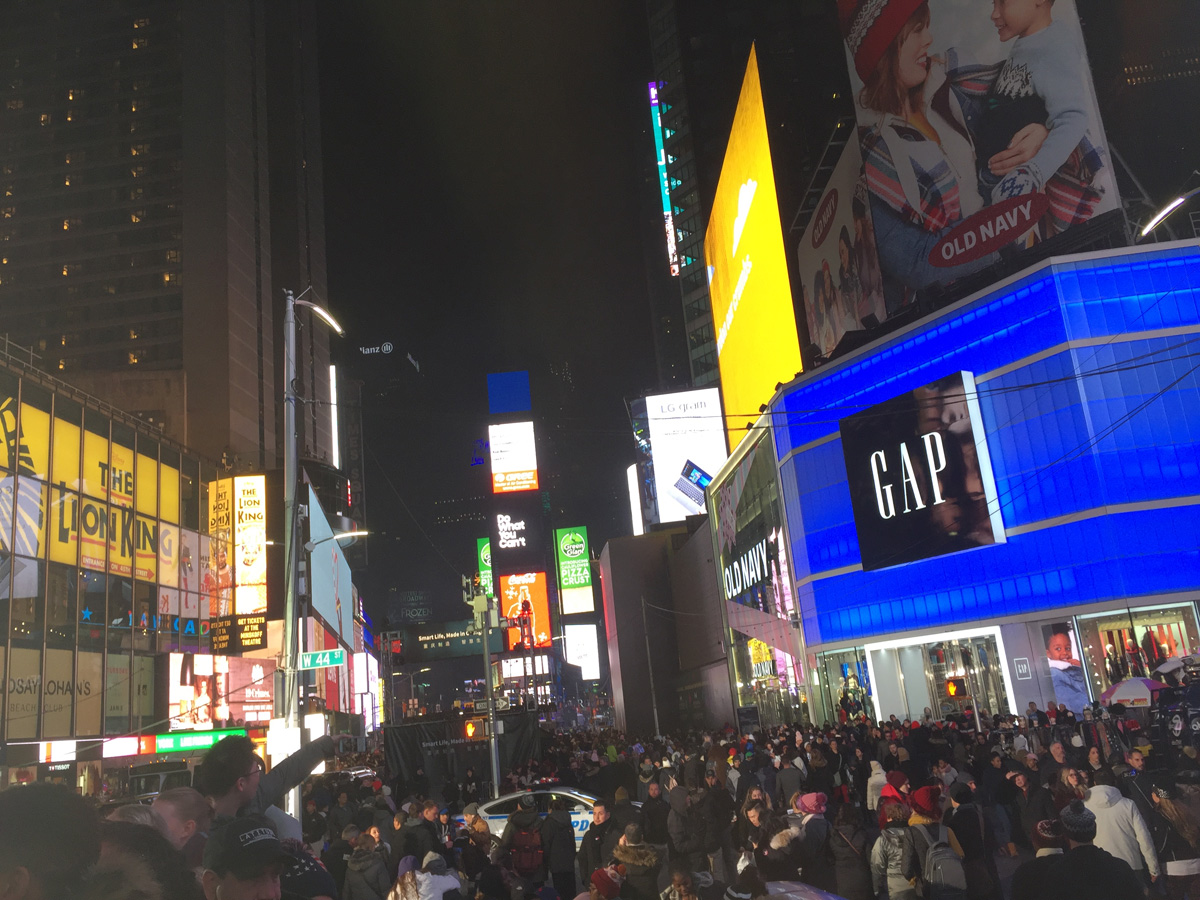
On Sunday night, Dec. 30, after seeing the new play “To Kill a Mockingbird” at the Shubert Theater, I walked through Times Square — which was the calm before the storm of the New Year’s Eve festivities! Normally I would not go near Times Square around New Year’s Eve, but after the theater got out on “New Year’s Eve Eve,” the crowds were small and there was almost no pushing and shoving.

It was a great opportunity to take a few pictures.

Fred Michmershuizen

William McKinley: 25th President

review of President McKinley: Architect of the American Century by Robert W. Merry It was under the calm, steady leadership of William McKinley that the United States first became a force to be reckoned with on the world stage. That’s according to the biography “President McKinley: Architect of the American Century,” by Robert W. Merry. Clocking in at just under 500 pages, the book describes how McKinley took us to war against Spain to liberate Cuba. Along the way we sunk the Spanish fleet in the Philippines and turned that into a U.S. protectorate. But that turned bloody when native militants fought for their own independence and we wouldn’t grant it. We sent troops to put down the insurgency and to help the Filipinos establish their own U.S.-approved self-government. (What could possibly go wrong?) We also seized Guam and made Puerto Rico a territory.

In addition to the Spanish-American War and its aftermath, McKinley formulated an “open door policy” toward China, which called for equal trade with China among all countries. He also wanted to prevent other countries from carving up China. All this got very messy during what became known as the Boxer Rebellion, in which anti-colonial nationalists attacked Christians and foreign diplomats, including Americans. The United States joined in an eight-nation alliance to quell the rebellion, but as a result the ruling Qing Dynasty later collapsed. Oops.

McKinley also helped lay the groundwork for the construction of a shipping canal through Central America, by re-negotiating treaties with Great Britain and by setting up commissions to study the project. The canal was originally intended to go through Nicaragua, but McKinley also wanted a site in what became Panama to be considered.

Oh, and it was under McKinley that the United States annexed Hawaii. All this happened in McKinley’s first term.

Just like Rutherford B. Hayes and James A. Garfield, two of his recent predecessors, McKinley was a Republican from Ohio who had served in the Civil War. McKinley entered the war as an enlisted soldier and later became an officer, achieving the rank of Major. He fought in numerous engagements, including the Battle of Antietam. After the war McKinley was elected to Congress and focused on the issue of protective tariffs. After being gerrymandered out of office, he was elected governor of Ohio.

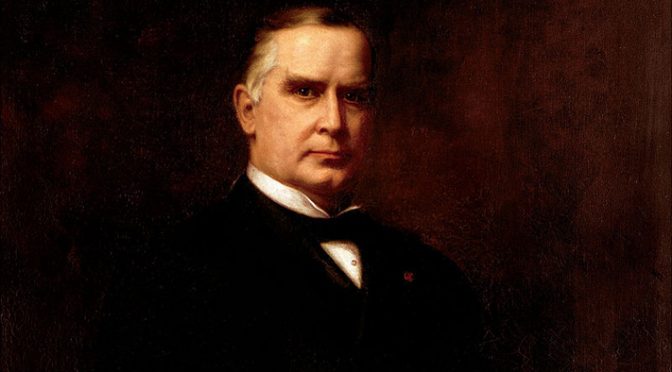
White House portrait of William McKinley by Harriet Anderson Stubbs Murphy (Public domain)

When he ran successfully for president in 1896 against Democrat William Jennings Bryan, McKinley did not travel the country to deliver speeches but rather conducted a “front porch campaign” in which various constituencies came to Ohio to visit him. It was a method of campaigning that had been previously employed by Indiana’s Benjamin Harrison, but McKinley was better at it, staging each front porch visit for maximum effect. The architect of his campaign, political ally Mark Hanna, distributed large volumes of campaign literature.

At the time the two biggest domestic issues were protective tariffs, and what to do about silver vs. gold as it related to the nation’s money supply. On the tariff issue, McKinley wanted to maintain protective rates but wanted the flexibility to negotiate reciprocity agreements with individual nations. On the metals issue, McKinley wanted gold but at the same time did not want to to shut out the silver advocates, who represented powerful constituencies. As his term in office went on and the nation’s economy improved, McKinley was able to soften his stance on tariffs and eventually sign legislation establishing a gold standard for the nation’s money supply once and for all.

Another domestic issue at the time was the problem of corporate monopolies, or trusts. A recent Supreme Court decision had struck down a law, and McKinley subsequently did very little to rein in trusts, saying federal legislation would likely be unconstitutional. It also appears that McKinley did very little if anything about civil rights, certainly nothing that was documented in any detail in the book.

Two future presidents played prominent roles during McKinley’s presidency. Theodore Roosevelt was McKinley’s Assistant Secretary of the Navy, but he resigned that post when the Spanish-American War broke out. Roosevelt founded the Rough Riders and fought in Cuba, then ran for governor of New York and won, before getting himself on the ticket in 1900 as the Republican vice presidential nominee. According to the book, McKinley did not want Roosevelt on the ticket but felt there was nothing he could do to stop him. McKinley also appointed William Howard Taft, who had been a circuit court judge, to be the civilian governor of the Philippines. In addition, future president Herbert Hoover was a mining engineer deployed to China.

Sadly, President McKinley was the victim of gun violence. He was shot twice at close range while visiting the Pan-American Exposition in Buffalo in September 1901, and he died a week later. The assassin was Leon Czolgosz, an anarchist.

An artist’s drawing depicting the assassination in 1901 of President William McKinley in Buffalo. (Public domain)

Here are some additional facts about our nation’s 25th President:

  • McKinley was the fifth president to die in office and the third to be assassinated.
  • His wife, Ida, had a number of chronic illnesses, both physical and psychological, that plagued her incessantly. At times her antics bordered on insanity, yet McKinley was devoted to her and constantly catered to her every demand.
  • The McKinleys had two children, both daughters, who both died in childhood.
  • After the election of 1896, Mark Hanna persuaded McKinley to name sitting U.S. Senator John Sherman of Ohio to the Secretary of State post, so that he could run for Sherman’s open Senate seat. It was a crazy plan, but it worked. Hanna became a Senator and subsequently ran McKinley’s successful re-election campaign in 1900.
  • Garret A. Hobart of New Jersey was McKinley’s first Vice President. But Hobart died in office, clearing the way for Theodore Roosevelt to run on the ticket in the election of 1900.
  • The election of 1900 was a rematch between McKinley and William Jennings Bryan. When McKinley won decisively, he considered that a confirmation from the American people that he was doing everything right.
  • Unlike his immediate predecessor, Grover Cleveland, who largely ignored the press, McKinley was open with the press. In the papers he received plenty of praise, and lots and lots of condemnation over his “imperialist” policies.
  • Oh, and one extra special fun fact: The wonderfully talented actor Michael Urie — who is currently appearing on Broadway in the lead role in Harvey Fierstein’s “Torch Song” — has a dog named President McKinley! It’s a Boston Terrier-Chihuahua mix, and, according to the New York Post, he puts “Kinley” in a backpack and they ride around town together on a bike!

As presidential biographies go, I found Robert W. Merry’s “President McKinley” to be insightful, with some very good analysis. As Merry freely admits, McKinley lacked creative thinking and was not the most charismatic of presidents. He did not have the force of personality of his immediate successor, Theodore Roosevelt. At the same time, to his credit, he did not make rash policy decisions or offer any bold pronouncements. (In other words, he did not tweet!) Yet Merry points out that despite McKinley’s lack of charisma, he usually achieved his goals in his own way, by listening respectfully to others, considering all sides of an issue before making a decision, and then using “incrementalism” to get what he wanted. But when it came to an aggressive foreign policy, were McKinley’s decisions good or bad? George Washington had famously warned our nation to avoid foreign entanglements, a policy that stood fast for the better part of a century. It’s therefore a bit shocking, in a way, to read how McKinley would point the United States on a much different path. He set the stage for the United States to take a leadership role in the enormous conflicts that would soon envelop the globe in two world wars. It’s what would later become, in what Merry calls in the subtitle to his book, “The American Century.”

Christmas Eve in New York City

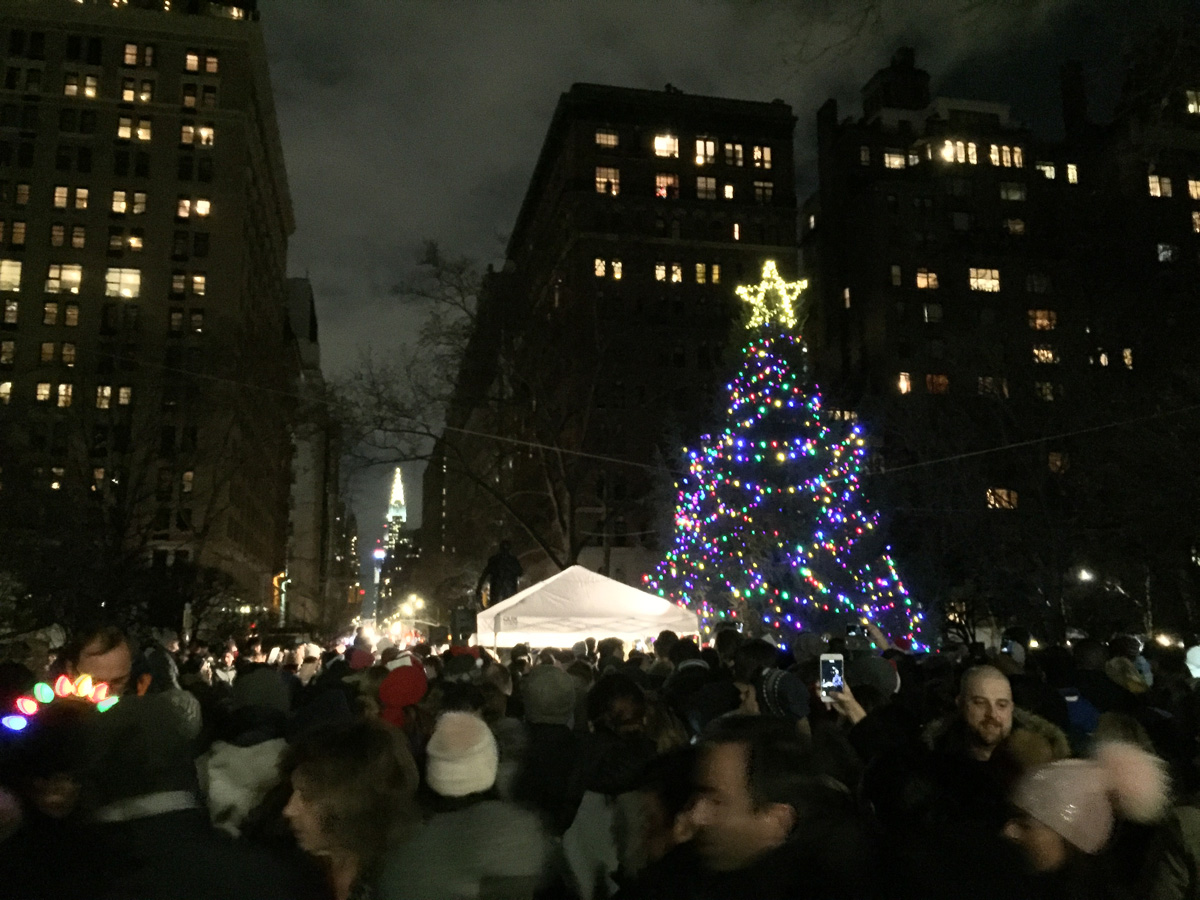
I was out and about on Christmas Eve. First stop was Gramercy Park — which is open to the public for ONE HOUR ONLY every year on Christmas Eve, for Christmas carols! I have been intending to go every year for many years, but this was the first time I got around to it! And probably the last, as well, because it was crowded, dark and cold! But at least I can say I have been inside Gramercy Park!

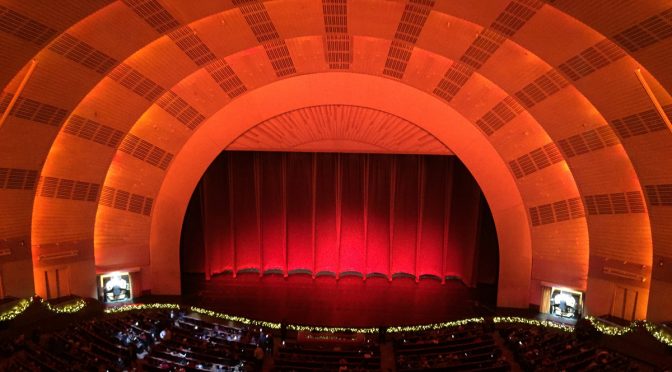
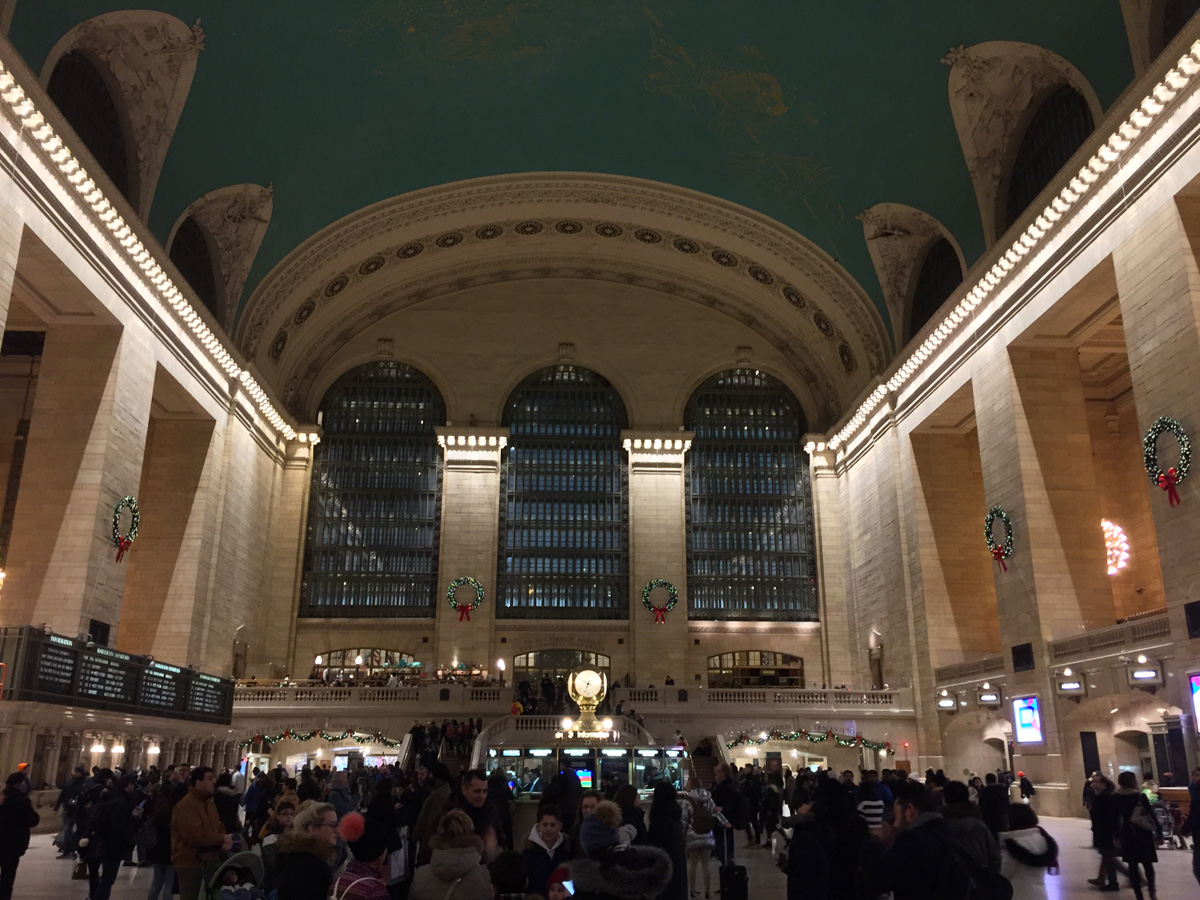
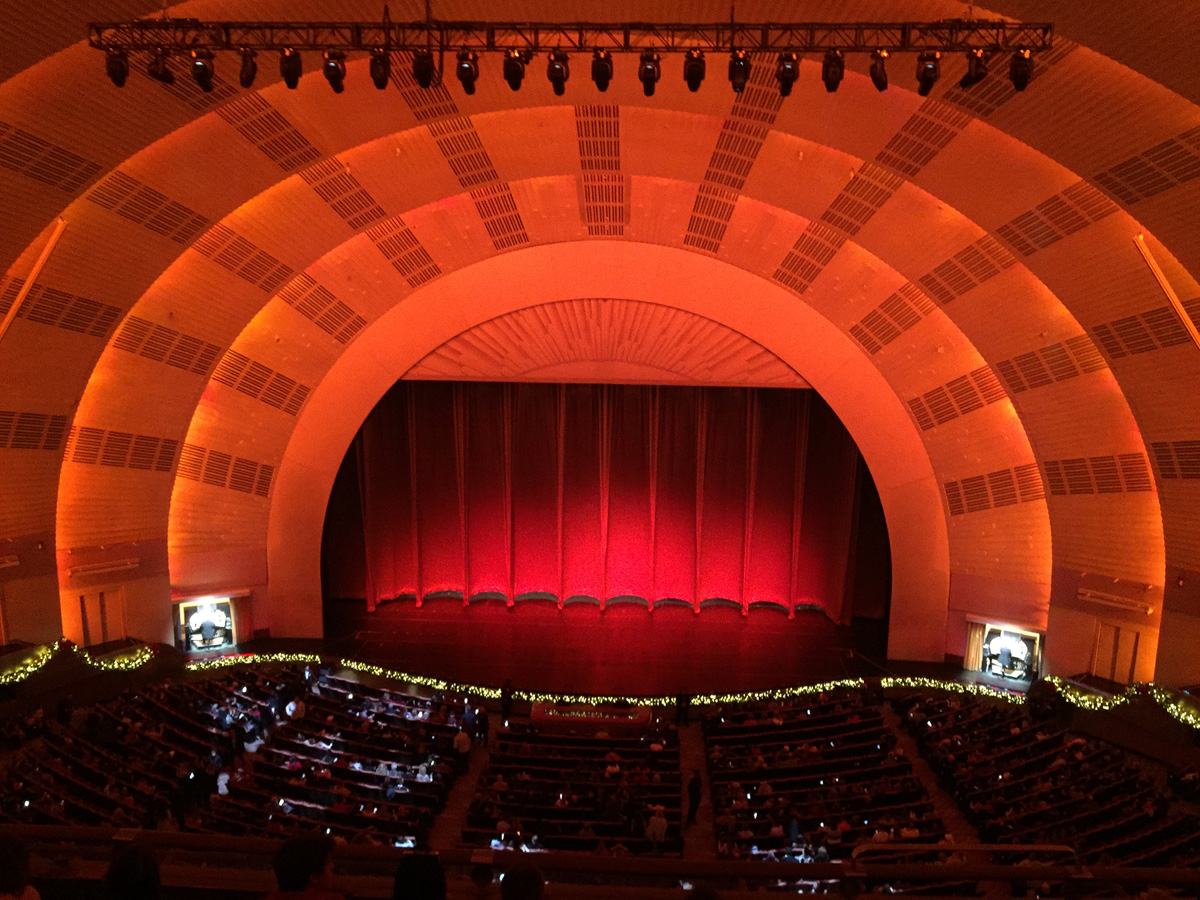
Next stop was Grand Central Terminal, on the way to Radio City Music Hall, for the Christmas Spectacular, which I attended with friends Jay and Franklyn.