A few new plants for the kitchen window, along with some others that have been there for many years:

Cacti and succulents do well with the southern exposure.

A few new plants for the kitchen window, along with some others that have been there for many years:
Cacti and succulents do well with the southern exposure.
I just got back from my annual trip to Chicago for Dental Tribune, where I covered the Chicago Dental Society’s annual Midwinter Meeting. We published three issues of our ‘today’ daily newspaper — one published in advance, two more live on site.
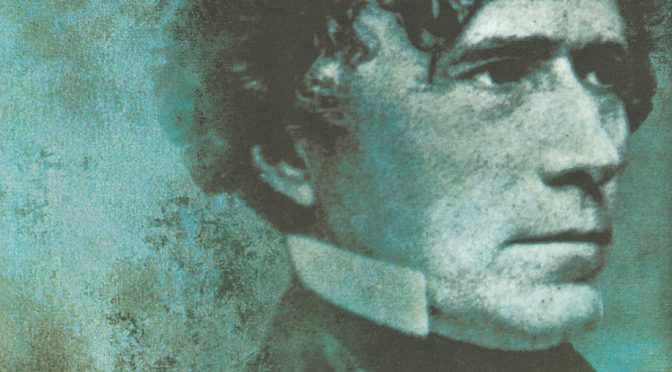
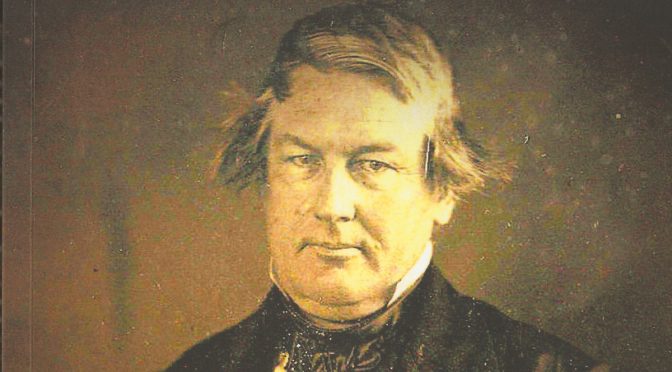
The night before the meeting started, I covered Oral Health America’s Annual Gala & Benefit at the Marriott Marquis. My article about the event is posted to the Dental Tribune website, link here. During the meeting I interviewed Michael Cataldo, CEO of Convergent Dental (pictured above) about his company’s laser technology, article posted here. I also photographed dozens of company booths in the exhibit hall, and my photo gallery from the event is posted here.
We stayed at the Sheraton Grand. Here’s the view from my hotel room:

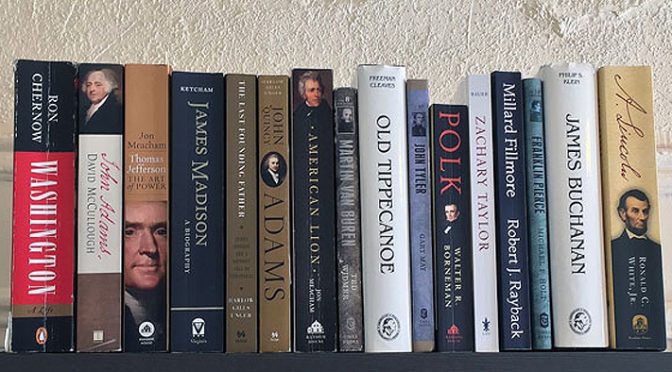
In early 2017, I decided to make a commitment to read at least one biography of every president, in order. As of today (Feb. 18, 2018) I have finished everyone up to Lincoln, the 16th president. For some presidents — Washington, Madison and Jackson — I have read two books. I also finished biographies of Alexander Hamilton, Benjamin Franklin, John Jay, the Marquis de Lafayette and Harriett Tubman.
How do I decide which author’s book to read on a particular president? One of my favorite sources is Stephen Floyd’s excellent website, My Journey Through the Best Presidential Biographies, and his very helpful list of book reviews, located here. There is also a good listing by Natalie Jennings and Sean Sullivan on the Washington Post’s “The Fix” blog, located here. I also consult the reviews on Amazon, and The New York Times Book Review is helpful for more recently published books.
I prefer to a cradle-to-grave, one-volume book, and I prefer to get a new, hard copy (I do not like to read an e-Book). Because I have hang-ups about germs, getting a clean copy is important to me! I prefer paperback to hardcover, because paperbacks are a bit lighter weight and easier to carry around.
How do I find time for so much reading? I try to devote at least an hour every night after dinner (so much less TV viewing time for me) and on long flights. If I go to lunch or dinner by myself, I bring my current book.
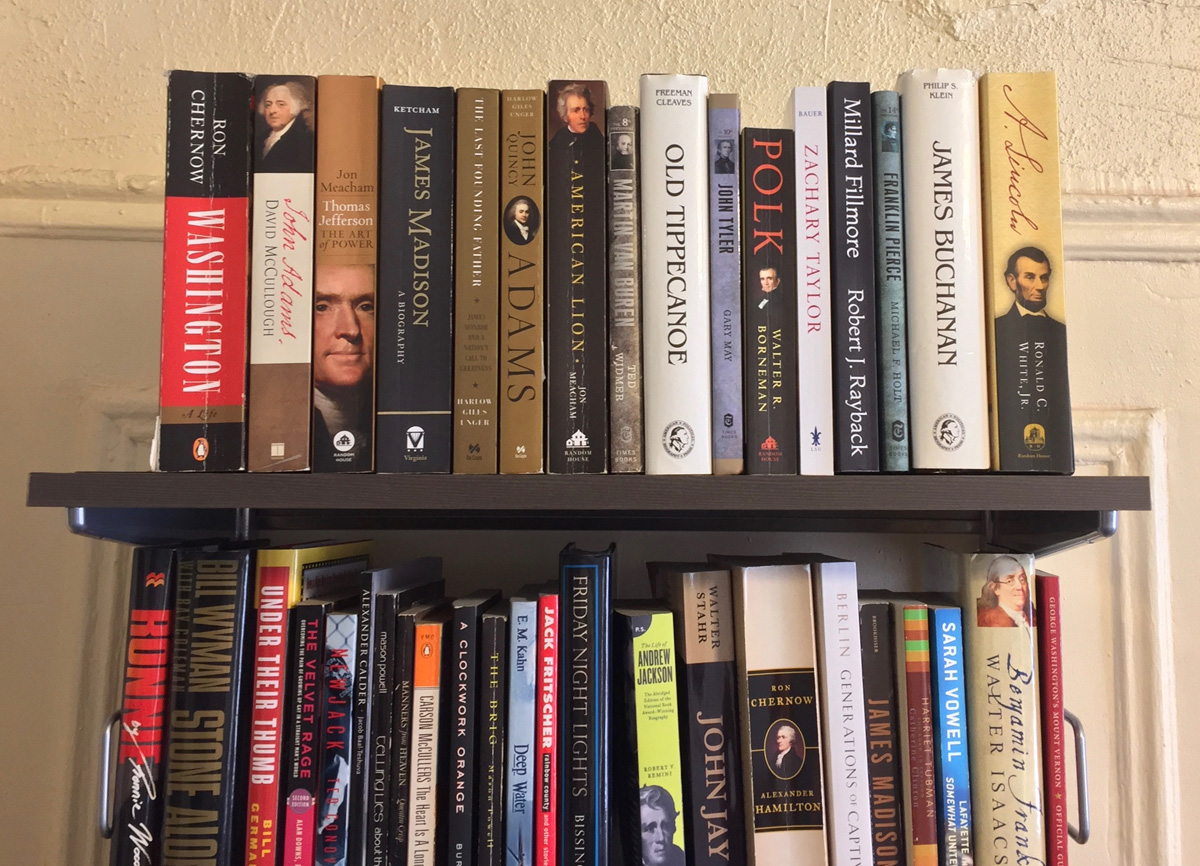
Before I move on to Andrew Johnson, the 17th president, I intend to read at least one more book on Lincoln, plus I also want to throw in Jefferson Davis, Robert E. Lee and Frederick Douglass.
I will continue to post my “book reports” as I continue reading, learning and reflecting.
It was during his second inaugural address that Abraham Lincoln used the words “with malice toward none, and charity for all.” The year was 1865, and the country had been in the grips of a tragic Civil War for the past four years. The Union was on the verge of victory over the Confederacy, and many who had assembled on the steps of the Capitol might have been eager to hear the Commander in Chief lash out at the secessionists. But instead this great man called on our nation to come together and heal. If Washington was the father of our country, Lincoln was its savior.
Lincoln was a gifted writer and orator. His second inaugural address is among the best speeches ever given. So is the Gettysburg Address. Today these words are inscribed in marble inside the Lincoln Memorial in Washington, D.C.
I learned a lot reading about the 16th president, including a few things that some people (including myself until recently) might not know.
For example, the famous Lincoln-Douglas debates took place not for the presidential election of 1860, but for the 1858 Senate election in Illinois, in which Lincoln was running against the incumbent Democrat. There were seven debates in all, each attended in person by thousands of citizens and widely published in newspapers throughout the country. Although Lincoln lost the Senate seat to Douglas, it was the publicity from the debates that brought Lincoln to national prominence. It had been the second time Lincoln had run for the Senate and lost.
Another thing I learned, is that the Emancipation Proclamation only freed slaves in the states and parts of states that were in rebellion. It did not apply to any slaves in the four border states (Delaware, Kentucky, Maryland and Missouri) that had not joined the Confederacy. Lincoln used his war powers to justify the Emancipation Proclamation. Shortly thereafter, it was under Lincoln’s leadership that Congress passed the 13th Amendment, ending slavery once and for all.
Oh, and I did not realize this either but Appomattox Court House is the name of the town in Virginia (not the building!) where Lee surrendered to Grant, thus ending the Civil War.
Nicknames included Honest Abe and the Rail Splitter. He was also sometimes called Father Abraham. Lincoln had opened a store in Illinois that went out of business, leaving him in debt when he was a young man. He could have skipped town, as most would have probably done, but Lincoln paid off all his creditors, which took him years. That might have inspired Honest Abe. The Rail Splitter had to do with Lincoln’s prowess in his youth with an axe, building fences. Lincoln was really good with an axe. He was strong. He could wrestle too.
More fun facts about Lincoln:
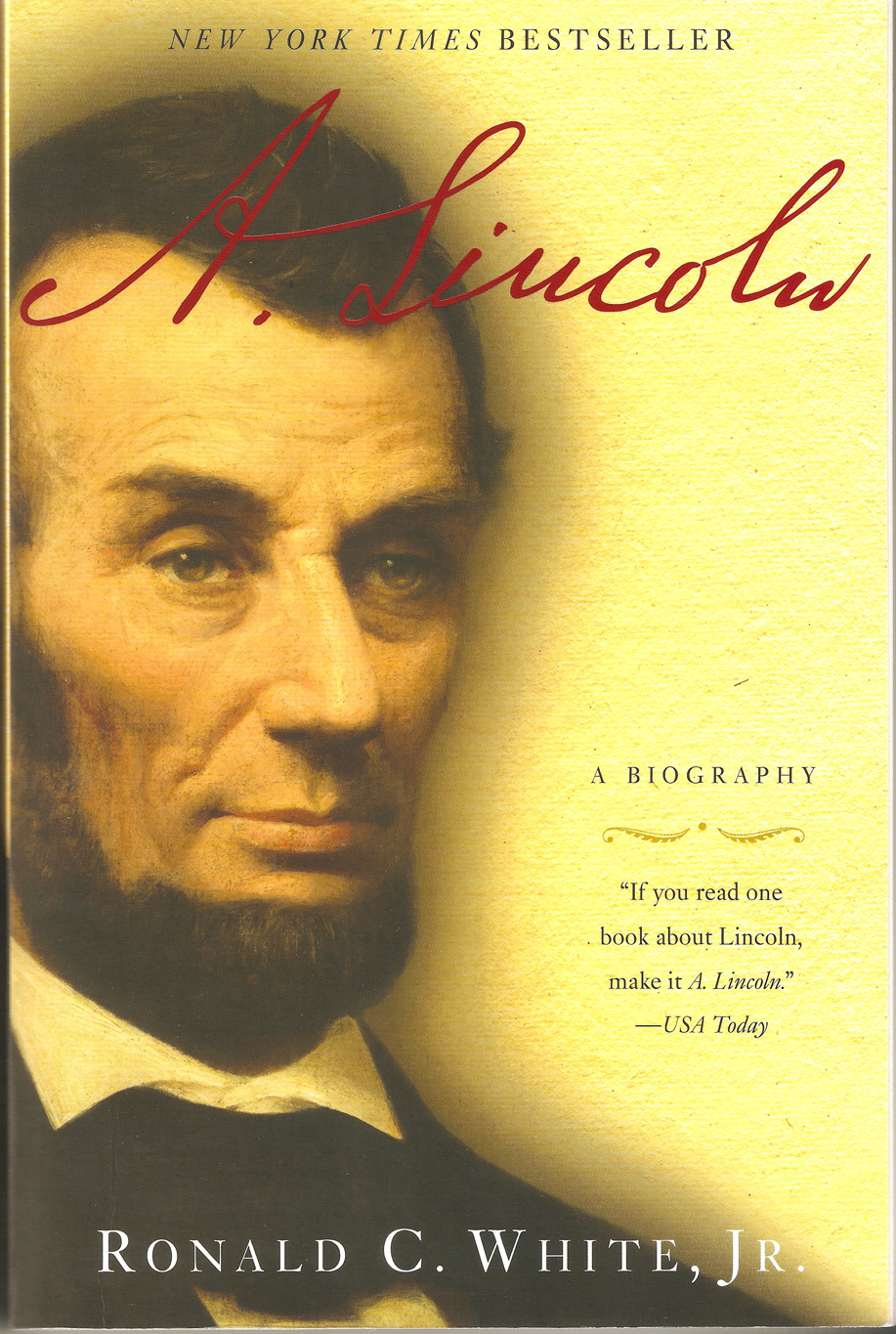
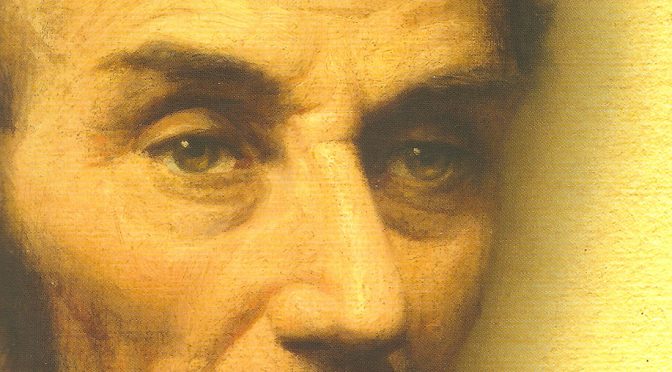
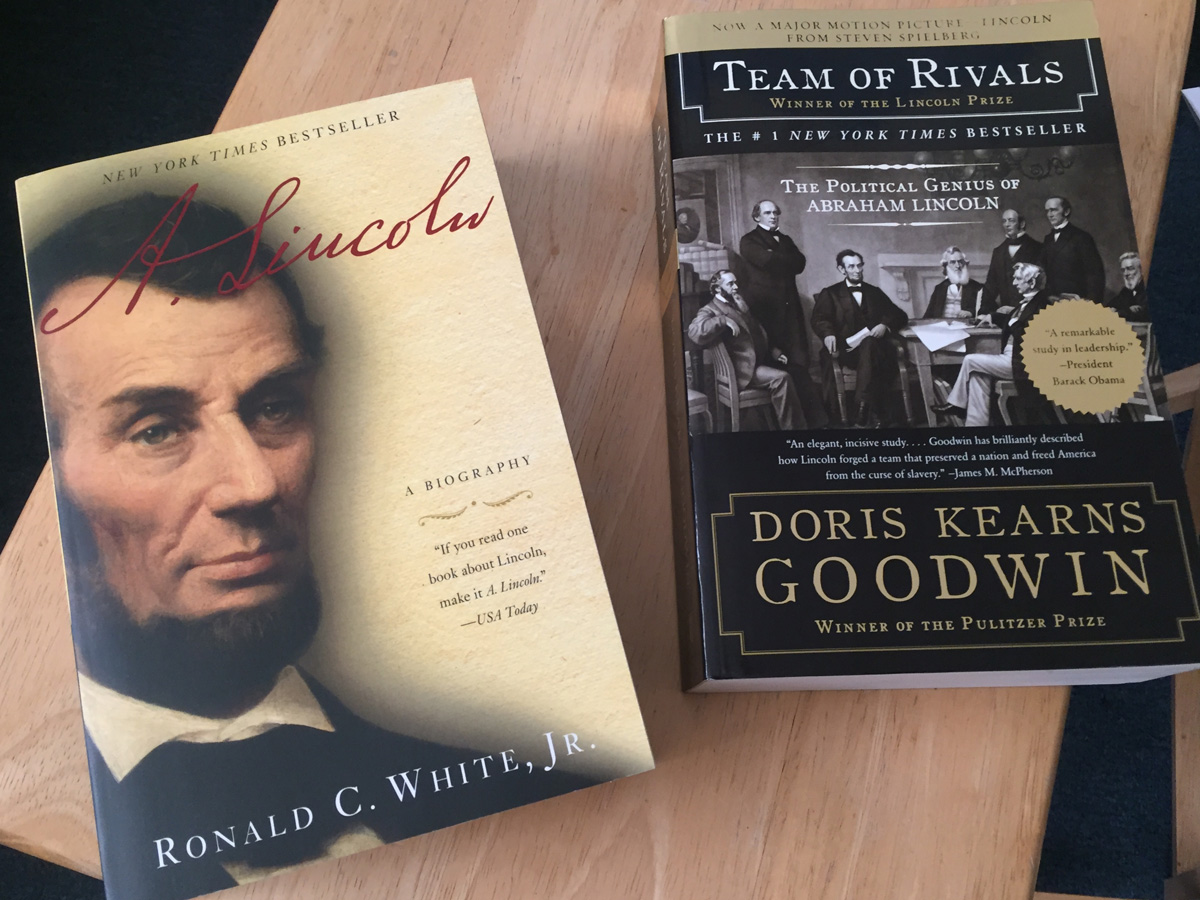
Thousands of books have been written about Lincoln. If you go to the Strand Bookstore on Broadway and 12th Street in New York City, the section is about five feet wide from the floor to way above my head. Online, you can find lists of the “Top 5 biographies” or the “Top 25 biographies” of Lincoln, there is even one list that includes 86 titles. I selected “A. Lincoln: A Biography,” by Ronald C. White. I was deeply moved by this book, and at many times it had me literally in tears. The book includes many helpful photographs and illustrations, and a few maps. In my view, White does an amazing job of sharing with the reader the way Lincoln thought about things and the way his views developed over time. As White explains quite well, Lincoln was constantly thinking things through, looking at a problem from all sides, trying to understand what his opponents might be thinking. This author demonstrates that while Lincoln made many mistakes, as all leaders invariably do, he always learned from these mistakes and rarely repeated them. White also explains in great depth the evolution of Lincoln’s moral and religious beliefs over time, and how he used the Bible as inspiration for many of his speeches.
I’m going to read more about Lincoln, and about the Civil War, but this book was an excellent starting point.
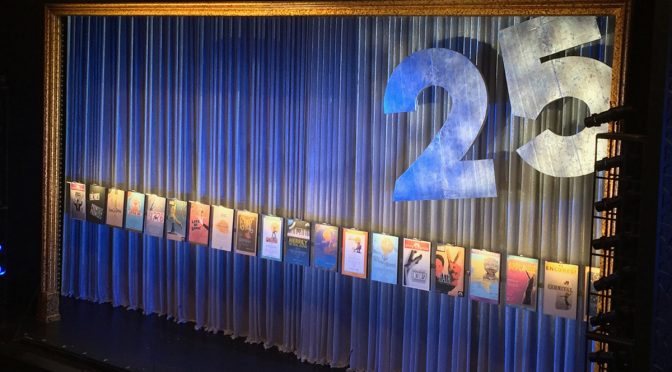
Part of New York City Center’s “Encores! At 25” series, “Hey, Look Me Over!” features songs from Broadway musicals that not been performed at Encores!
This featured Bebe Neuwirth, Vanessa Williams and many others
James Buchanan was our nation’s 15th president, the immediate predecessor to Lincoln. Elected in 1856, Buchanan served in the White House from 1857 to 1861. During his single term, two of the worst things to ever happen to our country took place.
Just days after Buchanan took the oath of office, the Supreme Court issued its infamous decision in the Dred Scott case, which invalidated the Missouri Compromise and ruled that it was unconstitutional for the federal government to regulate slavery in the territories. Even worse, the court ruled that nobody of African descent was or could ever be an American citizen.
Buchanan had hoped (naively? stupidly?) that this court ruling would settle once and for all the controversy over slavery, which had been getting worse and worse especially in Kansas. There is some speculation that Buchanan knew about the Dred Scott decision in advance or even perhaps influenced the court behind the scenes.
It was also on Buchanan’s watch, in the closing weeks of his presidency, that seven of the Southern states finally seceded, led by South Carolina in December 1860 and followed in 1861 by Mississippi, Florida, Alabama, Georgia, Louisiana and Texas, thus precipitating the Civil War. When this happened Buchanan wrote a long letter, published widely in the papers, blaming secession on the abolitionists and the Republican party. Like Fillmore and Pierce before him, Buchanan thought the abolitionists were a bunch of dangerous troublemakers.
When Buchanan first entered politics he was a Federalist, but he soon became a Democrat. He was always trying to get his fellow Democrats in Pennsylvania and around the country to follow his lead, but he was not always successful at that. The Democrats were always fighting amongst themselves.
Before becoming president, Buchanan served in the U.S. House of Representatives and in the U.S. Senate. In those days Senators were elected by state legislatures, not by popular vote. Andrew Jackson, who did not particularly like Buchanan or trust him, sent him on a diplomatic mission to Russia (likely to get him out of the way for a while). He later became Secretary of State under Polk, during which time he was constantly throwing hissy fits when he did not get his way, and often threatening to resign. Pierce sent him to England to negotiate a treaty.
As president Buchanan is credited with opening up trade channels with Asia, and with strengthening ties with Great Britain. He adhered to the Monroe Doctrine. He attempted but failed to purchase Cuba from Spain, and he attempted but failed to take more territory from Mexico. Oh, and there was also the Panic of 1857, a financial crisis that affected not only the United States but also much of the world economy at the time.
A few fun facts James Buchanan:
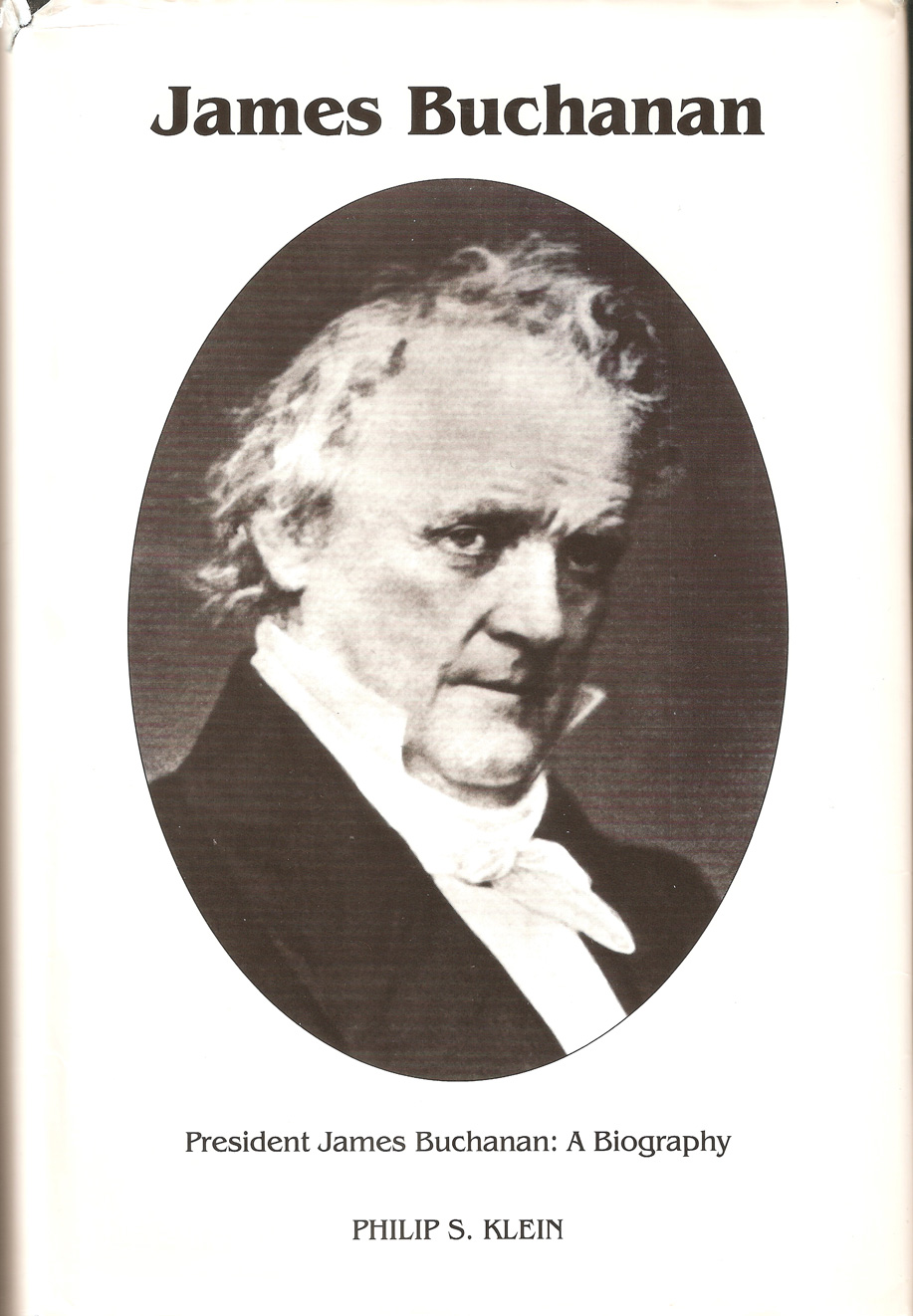
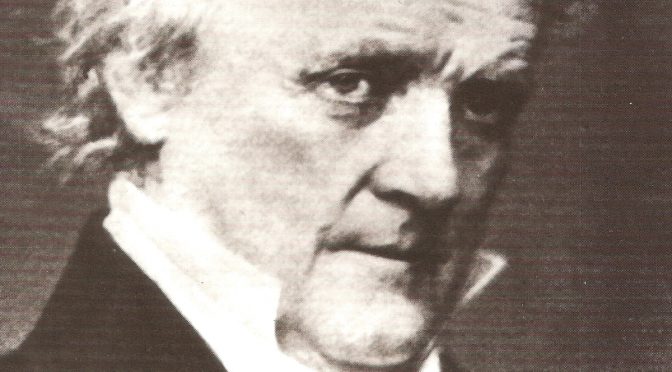
Buchanan is often ranked as the very worst, or among the worst, of all the presidents. In his 429-page “President James Buchanan: A Biography,” author Philip S. Klein attempts to rehabilitate Buchanan somewhat, arguing that Buchanan did the best that he could under the circumstances, and that by placating the South he was trying to preserve the Union. Writing in 1961, Klein also makes a pretty good case that a lot of his negative image throughout the decades was the result of an unfair smear campaign carried out in the press by the Republicans during the Civil War. Perhaps, but I am still not going to let Buchanan off that easy. In my view he always seemed to favor the slaveholding South, and he tended to put politics over right and wrong, thus landing on the wrong side of history.
Toward the end of the book, a year before he died, the now former president Buchanan wrote a long public letter in which he argues forcefully that African Americans should not have the right to vote. As my sister Peggy would say, “That guy’s a jackass.”
Our country’s 14th president had movie-star good looks, but movies hadn’t been invented yet. He had a strong physique, and he was outdoorsy. In college he liked to wrestle. He had a politician’s gift of remembering people’s names and faces. He was a powerful orator. And, importantly, he was born in a log cabin! Back then it really helped if you were born in a log cabin.
When Franklin Pierce was elected president in 1852, he had two principal aims in mind: to hold the union together, and to keep the Democratic Party from splintering. Sadly, he failed at both goals.
The big issue of the day was slavery — more specifically, whether it would be allowed in new states and territories as they joined the union. Under the Missouri Compromise, dating back to 1820, Missouri had been allowed to enter the union as a slave state but slavery was then prohibited everywhere else within the Louisiana Purchase north of the 36-30 parallel (a line which corresponded with Missouri’s southern border). This regime began to unravel, however, with the Compromise of 1850, signed by Pierce’s immediate predecessor, Millard Fillmore, which allowed California in as a free state, and allowed the new Utah and New Mexico territories to decide for themselves whether they wanted to be slave or free. Much of this new land in the West was north of 36-30. Did this therefore invalidate the Missouri Compromise? Many argued at the time that it did.
Under Pierce’s watch came the Kansas-Nebraska Act (1854), which pretty much killed once and for all the Missouri Compromise. It said that the residents of the new territories could decide the slavery question for themselves under “popular sovereignty.” Settlers from both north and south immediately flooded into Kansas, and things turned violent. The southerners established a pro-slavery territorial government, but settlers from the north accused them of fraud and established their own anti-slavery government. Pierce sided with the pro-slavery Southerners. He always seemed to side with the Southerners.
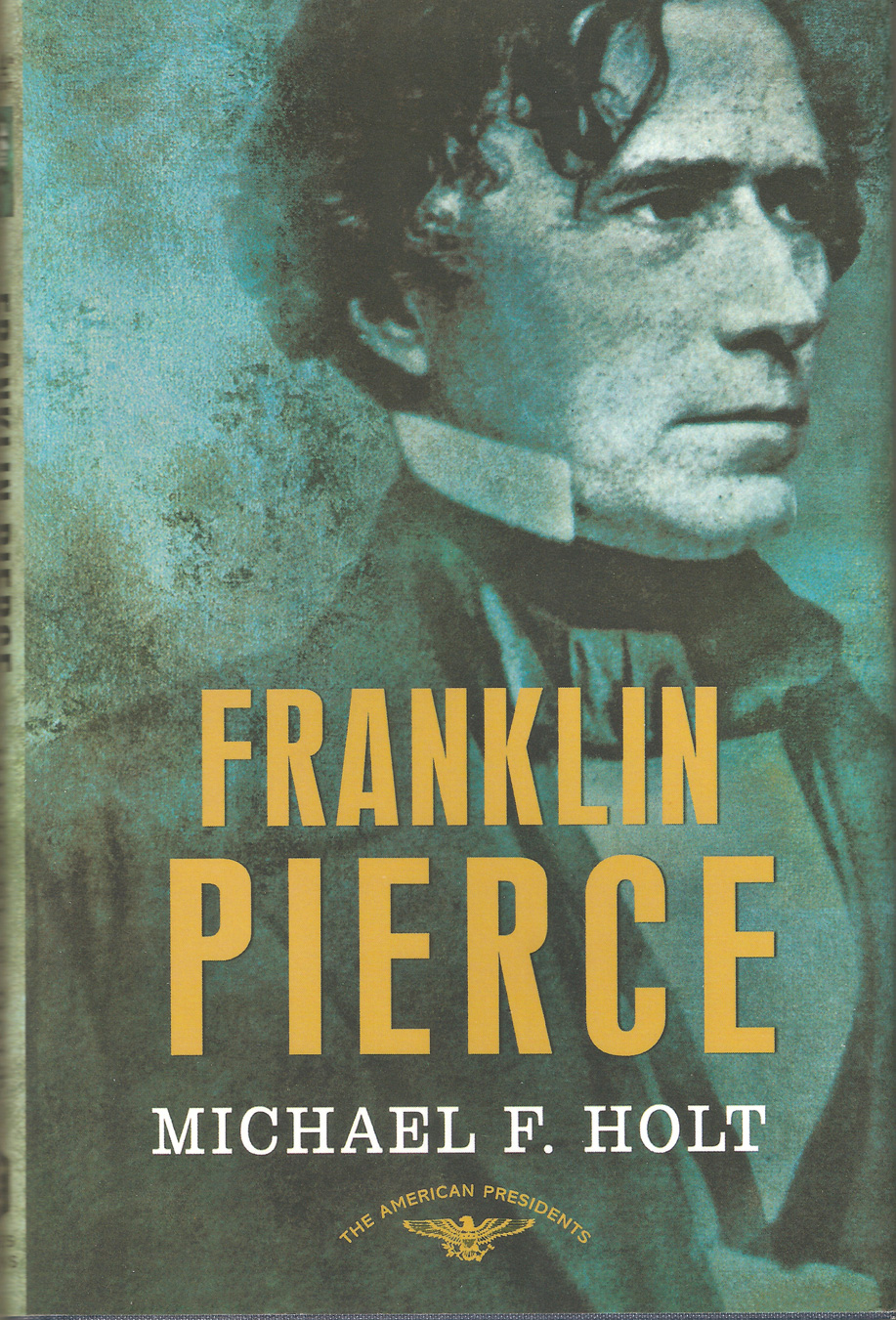
In his short but informative biography “Franklin Pierce,” part of the American Presidents Series, historian Michael Holt does not blame Pierce for making decisions that steered our country on a path toward civil war, but rather he tries to explain. He argues that Pierce thought at the time that he was acting in the best interests of the country as a whole, and that he was helping prevent southern states from seceding. They were always threatening to secede, those Southerners. At the same time Pierce was also trying to hold the Democratic Party together. The Whig Party had already crumbled, and Holt asserts that Pierce, in his own bizarre logic, thought the Kansas-Nebraska Act would unify the opposition, and therefore in turn help unify the splintering Democrats. It didn’t. And by the end of Pierce’s four years in office, the Democratic Party was so mad at him that they dumped him and gave their party nomination to James Buchanan instead.
Here’s a bit more of what I learned reading about Pierce:
Speaking of authors, Harriet Beecher Stowe published her novel “Uncle Tom’s Cabin” in book form in 1852, the year Pierce was elected. It became the second best selling book of the 19th century, after the Bible. Today “Uncle Tom’s Cabin” is sometimes blamed for having perpetrated negative stereotypes about African-Americans, but back in the 1800s it raised consciousness of countless Americans about the horrors and injustices of slavery. I wonder if Pierce read it at the time. I suspect not.
Reflecting a bit more on Pierce and other politicians of his day, including Presidents Millard Fillmore before him and James Buchanan after him, I am saddened. They seemed too focused on the day-to-day politics and did not seem comprehend the larger promise of our country, which according to our founding documents said freedom for all. George Washington saw the big picture. So did John Quincy Adams. Lincoln will too, eventually.
Here are recent purchases from Barnes and Noble
There were two major political parties through most of the 1840s and early 1850s — the Whigs and the Democrats. Both the Whigs and the Democrats each had northern and southern factions, and their leaders fought amongst themselves. The infighting was much worse in Whig party. Millard Fillmore, our nation’s 13th president, was a Whig. He was the fourth and final Whig to be president. He had been elected as Zachary Taylor’s vice president and became president in 1850, upon the death of Taylor. In 1852 the Whigs held their national convention in Baltimore but passed over Fillmore for the nomination, picking instead General Winfield Scott, who would go on to lose to Fillmore’s successor, Democrat Franklin Pierce. As I mentioned the infighting among the Whigs was awful, and the party essentially disintegrated after the election of 1852.
Four years later Fillmore ran for president again, unsuccessfully — this time as the candidate of the American party, also known as the “Know Nothing Party.” This party was made up of anti-Catholic, anti-immigrant bigots, but Fillmore did not openly express a bigoted ideology when he campaigned.
As president, Fillmore’s most consequential action was his signing into law the Compromise of 1850, which allowed California to enter the union as a free state. The southern states hated this because they wanted to preserve and expand slavery. To mollify the South, the compromise also included the Fugitive Slave Act, which required federal officials and state governments to participate in the forced deportation of those who had escaped to freedom, back to the south. Believing this to be constitutional and his duty to preserve the union, Fillmore enforced the Fugitive Slave Act.
Fillmore never took a strong stand for or against slavery, but before he left office he wrote a very bizarre and ridiculous plan to deport all the enslaved people and replace them with laborers from Asia. He had planned to deliver this idea as a farewell address to Congress, but his Cabinet talked him out of it.
The Compromise of 1850 probably postponed the civil war for a few extra years, but it came at a price. Yet while I am troubled by Fillmore’s acquiescence to the slave south, I do think he is under-appreciated as a chief executive. He successfully dealt with a number of foreign policy challenges. And he advocated policies that favored business interests, trade and shipping.
Here’s a bit more of what I learned about Millard Fillmore:
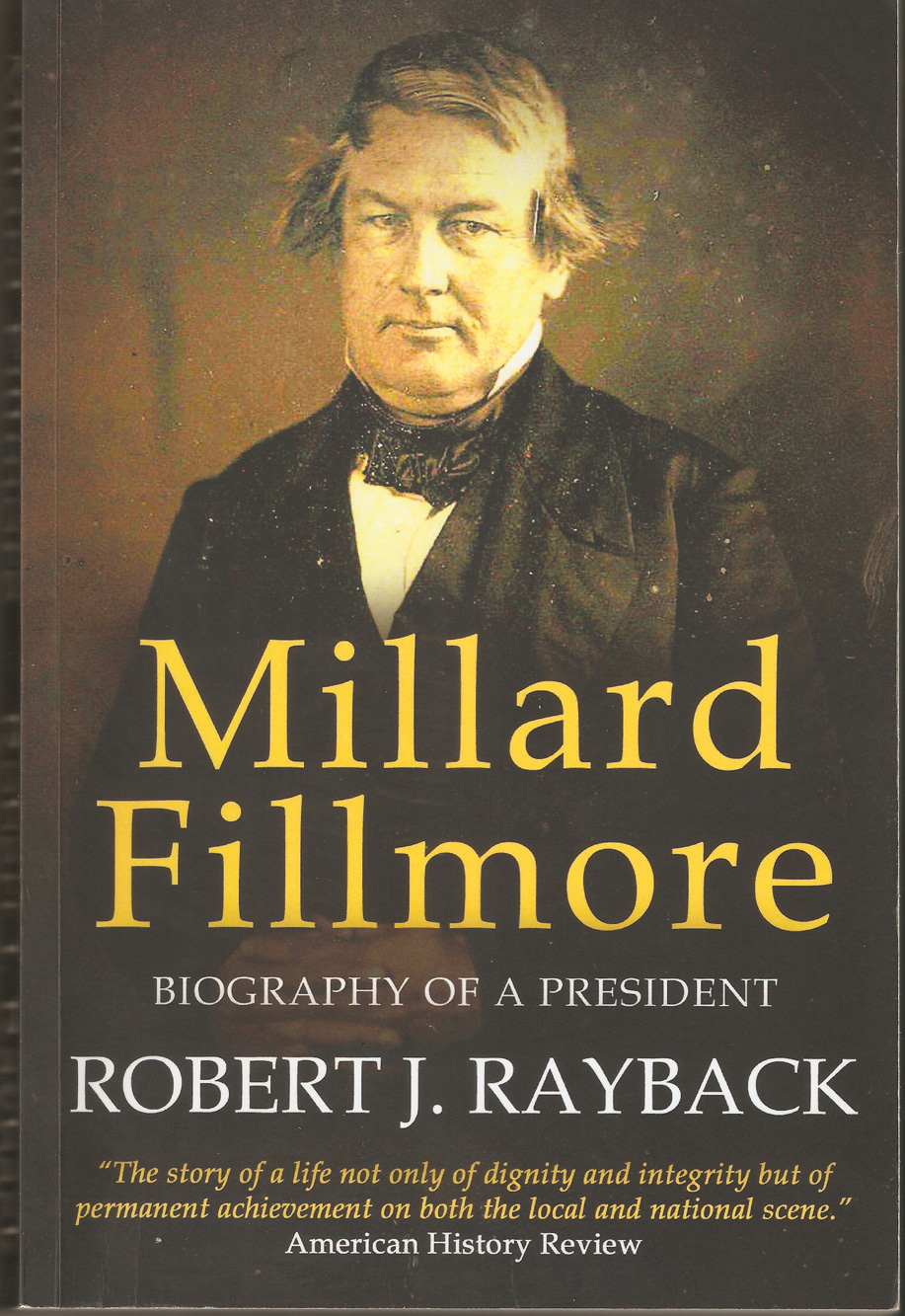
Today Millard Fillmore is largely dismissed as a forgotten president, and he is often ranked among the worst in presidential lists and surveys. He is even vilified by many historians. Biographer Robert J. Rayback, in “Millard Fillmore: Biography of a President,” presents a more nuanced view, putting Fillmore’s long life in public service in context with the times.
What I liked about this book is that it explained much of the political turmoil that Fillmore faced. Yet I also found this book to be long and tedious. It had bad punctuation throughout, and I found numerous typographical errors. (James K. Polk was spelled “Folk” at least four times. And this is the only book I have ever read in which Chapter 25 comes between Chapters 23 and 24. Where’s a good proofreader when you need one?)
Despite these flaws, I still consider this book to be a serious biography of an important American of his times. And because the subject’s career spanned so many key decades when the Whigs were a real force in American life, Rayback’s Fillmore biography also functions in many ways as a history of the Whig Party. I am glad I took the time to read this.
It’s always sad to see the discarded trees piled up on the sidewalks.

This is a common sight every year, as early as the day after Christmas!